Mark Sullivan: Read More Than You Write
Mark Sullivan’s reading list
9 books mentioned in this interview
- Bethlehem · Karen Kelly
- The Winter Soldier · Daniel Mason
- Red Famine · Anne Applebaum
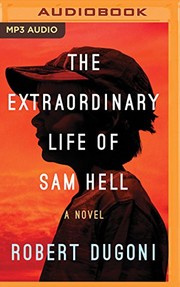
- The Extraordinary Life of Sam Hell · Robert Dugoni
- Story · Robert McKeeRecommended 8 times
- Trap Lines North: A True Story of the Canadian Woods · Stephen W. Meader
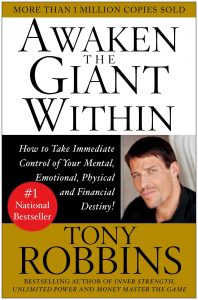
- Awaken the Giant Within · Tony RobbinsRecommended 3 times
- Legends of the Fall · Jim Harrison
- A River Runs Through It · Norman McLean
Books by Mark Sullivan: Private series, Beneath a Scarlet Sky
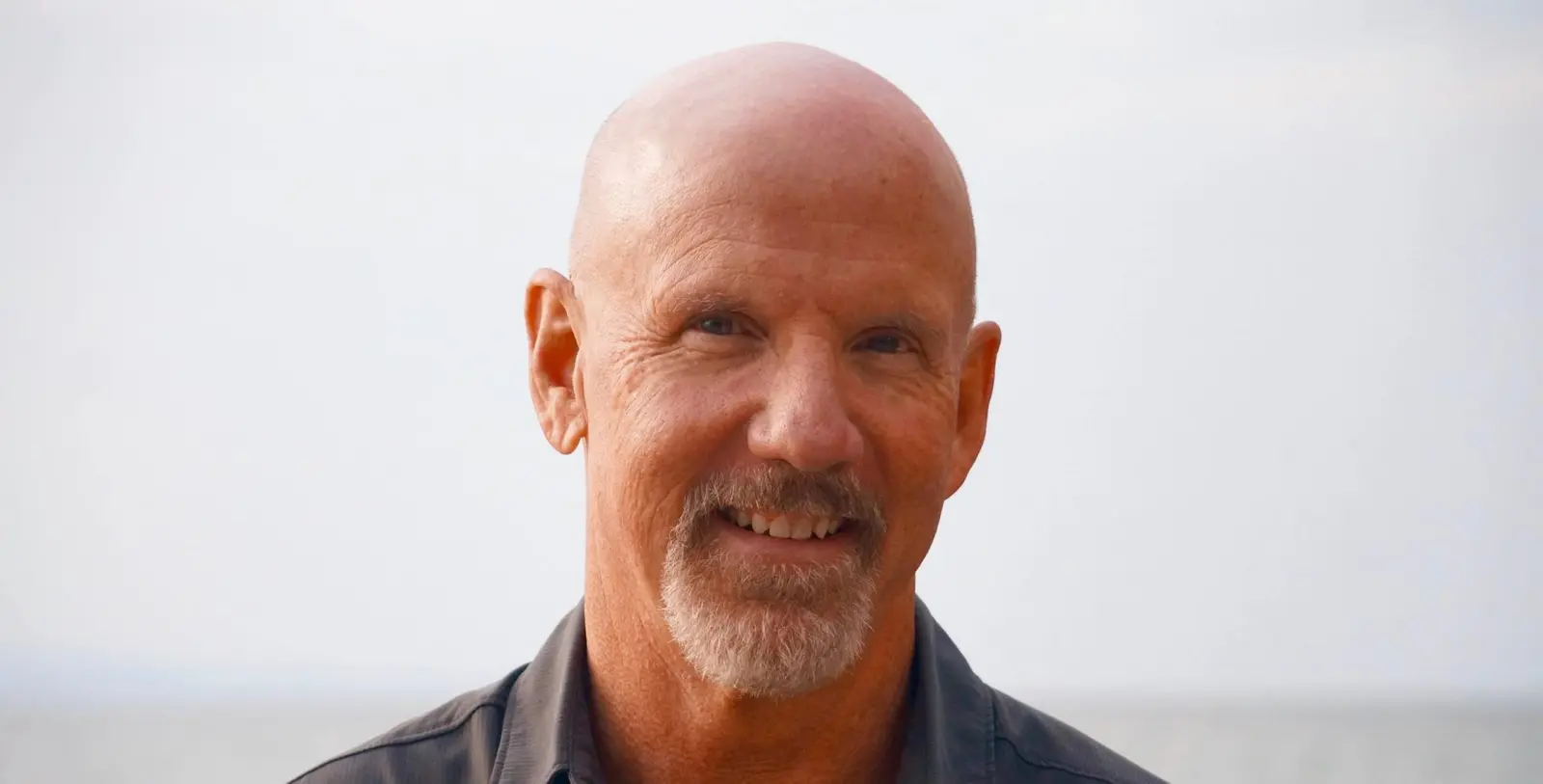
Mark Sullivan is the acclaimed author of eighteen novels, including the #1 New York Times bestselling Private series, which he writes with James Patterson. Mark Sullivan has received numerous awards for his writing, including the WHSmith Fresh Talent Award, and his works have been named a New York Times Notable Book and a Los Angeles Times Best Book of the Year. Mark Sullivan grew up in Medfield, Massachusetts, and graduated from Hamilton College with a BA in English before working as a volunteer in the Peace Corps in Niger, West Africa. Upon his return to the United States, he earned a graduate degree from the Medill School of Journalism at Northwestern University and began a career in investigative journalism. An avid skier and adventurer, Mark Sullivan lives with his wife in Bozeman, Montana, where he remains grateful for the miracle of every moment. Mark’s most recent book is Beneath a Scarlet Sky. Please enjoy my interview with Mark Sullivan.


When someone asks you ‘what do you do for a living?’ – How do you respond?
I am an author and speaker who tells stories that move, inspire, and transform.
What are you reading at the moment?
I just finished The Winter Soldier by Daniel Mason, about a medical student taught to be a WWI battlefield surgeon by a mysterious nun, and a debut novel, Bethlehem by Karen Kelly. I highly recommend them both. I’m also reading Red Famine by Anne Applebaum about Stalin’s starvation of Ukraine in the 1930s, and about to pick up The Extraordinary Life of Sam Hell by Robert Dugoni.


What’s your earliest memory of reading?
Sitting in my mom’s lap, and her teaching me to read when I was four. I somehow got it fast, over the course of weeks, and I was as excited as I’ve ever been that I got to go to the library with her.
If you could encourage young people to read one book in particular, what would it be and why?
I would tell them to read my book Beneath a Scarlet Sky. I say that not to toot my horn, but because so many young people I meet have a limited view of their innate capabilities. So many of them have helicopter parents who protect them from life, and so they never really get challenged in a meaningful way. The book tells the story of a 17-year-old, who’s basically a spoiled, rich kid as World War II comes for Italy. Pino Lella ends up casting all that aside to risk his life guiding Jews escaping Nazi-occupied Italy, and then to risk his life again as a spy inside the German High Command. Many high school kids who’ve read the book have contacted me and said that seeing what Pino was capable of enduring at their age changed their entire perspective on life.
Can you remember the first story you ever wrote?
Yes. I got in a fist fight in parochial school in second grade. A terrifying nun named Sister Mary Joseph, who was also my mom’s best friend and the vice principal, picked me and the kid I was fighting up and hung us on coat hooks by our collars and her fists. She was a true six-footer, built like a line backer, and the school disciplinarian. This was back when fanny swats with a ruler were common, and I figured I had it coming to me. Instead, she leaned in my face, this monster penguin, and she told me my punishment was that I had to write a story and submit it to the grades 1-8 contest.
I was dumbfounded, but happy not to have a red fanny, and went home to write. My mom seemed oblivious when I told her I was going up to my room to work on a story. Sister Mary Joseph had not called her. I sat at my desk for almost an hour, trying to figure out what to write. I had no idea. Then a cottontail rabbit went burning through our backyard. Thirty seconds later, a beagle tore after it. They disappeared into a cornfield across the street. I wrote about the rabbit getting chased all over the farm, through the woods, and by my house. And for some reason, I won the contest and had to read the story in front of the school. They cheered. I was hooked.
What is the worst job you’ve ever had?
Scouring one-hundred-year-old, stand-up urinals in an old paper factory with a pumice stone. I was seventeen. It was the vilest job I’ve ever had, but it motivated me to study insanely hard. I never wanted to do it again.
What two pieces of advice would you give a young aspiring writer?
Read widely and constantly, more than you write. When you do write, do it at the same time of day, same place, for the same amount of time.
Do you read as much as you’d like to?
I don’t read novels as much as I’d like to. Much of my reading has to do with the projects I’m working on. When I go on vacations, however, I binge read novels and long-form narrative non-fiction.
What books do you feel are important reading for people on your career path and why?
Story by Robert McKee. At some point, beyond a thorough grounding in grammar and style, a novelist has to be able to tell a story. Of all the books I have read on the subject, McKee’s is the one I think of thirty years later. It not only shows how dramatic forces work, it teaches structure and a common vocabulary that can be used to discuss the weaknesses and strengths in any given story.

Is there a book that you’ve read more than once? What is it and why did you revisit it?
I read Trap Lines North: A True Story of the Canadian Woods by Stephen W. Meader at least four times when I was a teenager. The story is ostensibly about this fifteen-year-old in the Depression whose father comes down with multiple sclerosis. The boy is forced to take up his dad’s huge trap line through the wilderness for two entire winters in order to save his family. What the book was really about was a boy becoming a man overnight in the harshest of conditions. I think that’s what drew me to it repeatedly.

What book have you recommended the most to friends and family?

Who would you say are the three writers that continue to inspire you?
The late Jim Harrison continues to inspire me with his miraculous use of language. The Bronte sisters because they could tell one hell of a dramatic, love story. Charles Dickens because of his masterful understanding of how to structure an epic narrative.
What’s your favourite genre of book?
Any book that captivates me from page one. I’ll read any book in that genre.
What do you think a world without books would be like?
Manipulated, and feral.
Is there an author whose writing you’re such a fan of, that you’ll read everything they release?
Probably Dennis Lehane. He’s from Boston, and so am I, so there’s that. But it’s more than that, he seems to be constantly upping the ante on the challenges he sets for himself. I never know what I’m in for when I crack one of his books.
Do you think digital books will ever completely replace real books?
No. A former editor and friend of mine hit it on the head. He said books are kind of like the New York subway system. You appreciate the digital version, but you know that there’s a tried and true method of changing tracks manually or reading from an actual book if the electronics go down.
What book do you feel humanity needs most right now?
More stories to remind us that the forces of tyranny come in cycles, and when they do rise again, ordinary people have to stand up for their freedoms and the freedoms of all.
What is the book that you feel has had the single biggest impact on your life? What impact did it have?
Awaken the Giant Within by Tony Robbins. I read it shortly after my first child was born, and my wife wasn’t working. The book taught me that most people let life live them. Robbins convinced me I could live the grand, adventurous life I wanted. The book instilled in me an audacity of faith, a belief in myself that was so strong and certain that I quit my job as an investigative reporter and sole provider to my family in order to chase the insane dream of becoming a full-time novelist and adventurer.
Are there any books you haven’t mentioned that you feel would make your reading list?
All sorts of them, but here are a couple that never cease to amaze me because they are so tautly and elegantly told, and yet have stunning power to move the reader. It also helps that they’re both set in Montana where I live. Legends of the Fall by Jim Harrison is a novella that manages to beautifully convey a nuanced epic tale about three brothers from Montana who volunteer to fight in the trenches of World War I. A River Runs Through It by Norman McLean is also a novella about Montana brothers, fly fishing, and the tragedies of life. I consider it the finest piece of writing anyone has done in the last fifty years, and I’m reduced to sobbing every time I have the courage to pick it up and read the ending.


What books or subject matter do you plan on reading in the next year?
I am reading everything I can find on the Ukranian diaspora during World War II, which is the subject of my next novel.
If you were to write an autobiography – what would it be called?
Lucky Man.
If you’d like to learn more about Mark Sullivan, you can find him on his website, Facebook and Twitter.
As an Amazon Associate we earn from qualifying purchases made through links on this page.