
Christopher Riley: A Great Escape
Christopher Riley’s reading list
15 books mentioned in this interview
- The Three-Body Problem · Cixin LiuRecommended 4 times
- The Lure of the Falcon · Gerald Summers
- A Man on the Moon · Andrew Chaikin
- God’s Debris: A Thought Experiment · Scott Adams
- Story · Robert McKeeRecommended 8 times
- Varieties of Scientific Experience · Carl Sagan
- In the Blink of an Eye: A Perspective on Film Editing · Walter Murch
- Hector and the Search for Happiness · Francois Lelord
- Where Once We Stood
- Wind, Sand and Stars · Antoine Saint-Exupery
- The Little PrinceRecommended 12 times
- Men from Earth · Buzz Aldrin
- Easy Travel to Other Planets · Ted Mooney
- The Entrepreneurial State: Debunking Public vs. Private Sector Myths
- The Value of Everything: Making and Taking in the Global Economy
Christopher Riley is a writer and filmmaker specialising in science, engineering and history. His work has been celebrated by BAFTA, the US Television Academy, the Royal Television Society, the Sundance Institute and the Grierson Trust. Christopher Riley conceived and co-produced the multi-award winning feature documentary ‘In the Shadow of the Moon’, produced and directed on the hit National Geographic series One Strange Rock.
His VR show of astronaut Tim Peake’s Soyuz Capsule’s return to Earth has been seen by over 10,000 kids and his video installations have been screened around the world. Christopher Riley also created experiential documentary First Orbit, re-creating the pioneering flight of Yuri Gagarin, premiered on over 1600 screens in more than 130 countries.
Please enjoy my interview with Christopher Riley…
How do you describe your occupation?
I’m a writer, and film director and producer. This means that I spend my days writing – either for print or for scripts for documentary films, or organising the logistics to get them made.
Talk us through a typical day for you…
There’s no such thing as a typical day. Every day is different. What I do depends on the stage I might be at with a project, and often working on several at once I end up juggling the hours in a single day to fit in all of the tasks below. These range from speaking to people or reading about them and their work for the research needed for a new film or book idea, to pitching the stories to a third party to try and find investment to make them happen.
Or if I’m in production on a film – working to produce and write a shooting script, drawing up budgets, setting up a shoot with a team of other producers, researchers and production managers. Or if I’m on a shoot then a day might involve travelling somewhere to film and interview characters, or sitting in an edit (usually back in London) and shaping all the footage and re-working the shooting script into a finished film – which is mostly about writing again at that stage.
So a typical day can involve elements of all of these stages in making a film or writing a book, which can make each day very long. I tend to do some work every day of the week – and often work late into the evenings to try and keep up with all the concurrent projects that I might be involved with at any one time.
What are you reading at the moment and what made you want to read it?
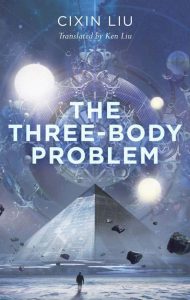
I’m reading a science fiction book called The Three-Body Problem by Cixin Liu. I’m not really a science fiction fan – but my next film is about science in China – and Cixin’s stories often reflect something of Chinese culture and history – which has shaped the way they approach and conduct scientific research today. And I’m trying to better understand that.

Can you remember the first book you read by yourself?
It was a book called The Lure of the Falcon by Gerald Summers, and I think it appealed to me because it was about nature and one particular creature’s relationship with a human being, and I was very interested in animals at that time.

Are you a page folder or a bookmarker?
Page folder; I always lose bookmarks!
When did you fall in love with reading?
After The Lure of the Falcon by Gerald Summers – I started reading a series of books by a writer called Willard Price. I loved his writings about two brothers who toured the world together collecting wild animals for zoological collections – something that is thankfully mostly outlawed today. They were adventure stories and I found the books terrifically absorbing, and first realised reading could be such a great escape.
If you could gift yourself books at age 16 and age 25 – what would they be and why?
At age 16 I think I would have given myself A Man on the Moon by Andrew Chaikin. I didn’t discover it until I was much older – and I think I would have loved to read it sooner. By 25 years old I think I would have given myself a book called God’s Debris: A Thought Experiment by Scott Adams. It reminded me how to see the world differently. Something I could have done with as I was completing my Ph.D. at that age.


What are the perfect reading conditions for you?
A long remote train journey or a plane ride, with no distractions from emails and other social media.
For someone starting out in your career, which three books would you make required reading and why?
Story by Robert McKee – because it makes you think deeply about structuring stories – and makes you a better writer and storyteller. And we all need to be better storytellers. The second would be Varieties of Scientific Experience by Carl Sagan – which gives a personal insight into understanding and appreciating the vastness of the cosmos, from one of the greatest thinkers of the 20th century. It’s a book that spans so much – and paints the most accurate picture I’ve read of how we might fit into the Universe. Lastly, I’d recommend In the Blink of an Eye: A Perspective on Film Editing by Walter Murch which is a wonderful insight into visual storytelling – that’s helped me to write better scripts.


If you could invite 5 authors (dead or alive) to a dinner party – who would they be and why?
Scientist and science fiction writer Isaac Asimov, physicist and inventor of the particle accelerator Gerard O’Neil, rocket scientist and futurologist Werner von Braun, science fiction writer Arthur C. Clarke and, although technically more a purveyor of books than an author, Jeff Bezos. The first group of people were the pioneering thinkers and writers behind the idea to make us a space fairing civilisation. They lived to see us start this dream – but died before it properly came to fruition. Connecting them with their modern-day equivalent – Jeff Bezos – whose space company Blue Origin might just succeed in delivering their dream, would make for an epoch-defining dinner party conversation.
What is your favourite thing about reading?
Escapism (in fiction) and the spread of ideas worth sharing (in non-fiction) – one of the key things that make us human.
What’s the best book you’ve read in the last 6 months?
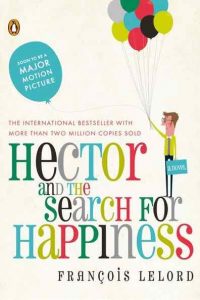
I’ve not read much in the last six months as I’ve been writing quite intensely for a couple of documentaries and two books I’ve been working on. I don’t read for pleasure when I’m writing – as I spend so much of the day reading for work. But before that – (within the last year) I read a book by Hector and the Search for Happiness by Francois Lelord. I loved Lelord’s simple use of language – which brought a refreshing, child-like wonder to observing the world and what makes life worth living. It inspired me to write my latest book – Where Once We Stood – which attempts to capture what it felt like to visit the Moon, buy using a similar voice and language as Lelord does.


If you could insert yourself into any book, which would you pick and why?
I’d love to have been a Capsule Communicators (Capcom) in A Man on the Moon by Andrew Chaikin – which would have meant conversing directly with the Apollo astronauts during their pioneering exploration of the lunar surface; as their only point of voice contact with Earth.

Name a book that you feel everyone would benefit from reading and explain why.
Wind, Sand and Stars by Antoine Saint-Exupery. This book, by the author of The Little Prince, is an autobiographical account of Antoine’s adventures during WWII – as a pilot, reflecting on the meaning and significance of life from a humanistic philosophy and how perceptions of life are shifted when you are tested to your limits. A good lesson for anyone grappling with their existence and purpose in life.


What is the book that you feel has had the single biggest impact on your life? What impact did it have?
Men from Earth by Buzz Aldrin, which I read in my early 30s. It’s a visceral account of what it was like to fly a 1960s spaceship to another world – and propelled me into an obsession with the Apollo program – that started me on a path which led to many of the books I’ve written, and films I’ve made since then, which celebrate the audacity of NASA’s 1960s Moon shots.

Are there any books you haven’t mentioned that you feel would make your reading list?
Easy Travel to Other Planets by Ted Mooney is a fictionalised story of an attempt at another Moon shot idea; the building of an interspecies communication bridge between humans and dolphins. This was a real experiment attempted in the 1960s, by neuroscientist John Lilly – which I made a film about, for the BBC, in 2014 called “The Girl who talked to Dolphins”. Like God’s Debris, Mooney’s book challenges our perceptions of reality and like Varieties of Scientific Experience, it tries to shed light on what it is to be human. Not only does it cover these grand ideas, but it also touches on some very prescient themes – such as our current epidemic of information overload and our existential environmental crises.

Which book sat on your shelf are you most excited about reading next and why?
I like books about connections and systems – the sort that makes our planet such a rich haven for life. Having spent most of my career immersed in planetary science I’m desperate to better understand our economic systems. To attempt this I’ve started to delve into the writings of Mariana Mazzucato. I’ve just bought her books The Entrepreneurial State: Debunking Public vs. Private Sector Myths and The Value of Everything: Making and Taking in the Global Economy. I’m excited to dive into these as soon as I get a chance.


If you enjoyed this interview with Christopher Riley, you can learn more on his website and on Twitter.
As an Amazon Associate we earn from qualifying purchases made through links on this page.
You might also like

Oliver Astrologo: Life Without Books Is Life Without Oxygen
Interview · 10 April 2018

Alexis Dubus: Touring with a Bag of Books in Tow
Interview · 31 October 2016
Books Like Project Hail Mary: 10 Science Fiction Novels to Read Next
Reading list · 3 November 2026

Derek Sivers: Edit Ruthlessly
Interview · 19 June 2022