Mark Elliott: A Considerable Wisdom
Mark Elliott’s reading list
18 books mentioned in this interview
- My Name is Red · Orhan Pamuk
- Secret Seven series
- IliadRecommended 3 times
- OdysseyRecommended 13 times
- Catch-22 · Joseph HellerRecommended 12 times
- Man and His Symbols
- Wolf Totem · Jiang Rong
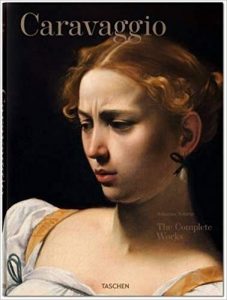
- Caravaggio: The Complete Works · Sebastian Schütze
- The Waves · Virginia WoolfRecommended 3 times
- The Complete Garden Expert · G. Hessayon
- The New York Trilogy · Paul AusterRecommended 3 times
- History of Byzantium
- The Decameron · Giovanni Boccaccio
- Report to Greco · Nikos Kazantzakis
- Master and Margarita · Mikhail BulgakovRecommended 6 times
- Five Modern No Plays · Yuko Mishima
- Manhattan Transfer · John dos Passos
- The Time Regulation Institute · Ahmet Hamdi Tanpinar
Mark Elliott was trained in experimental psychology at the University of London, and subsequently in psychophysics at the University of Leipzig, Germany and electrophysiology at the Max-Planck Institute for Cognitive Neuroscience, also in Leipzig, Mark is a measurement scientist with backgrounds in general psychology and cognitive science. Mark Elliott was employed as Senior Lecturer in Psychology at NUI Galway in 2005, coming to Ireland from an Associate Professor position at the Ludwig Maximilian University, Munich, Germany. He was appointed Full Professor at Kyushu University (2010). In May 2016 Mark Elliott took up the appointment as Professor at Sunway University Malaysia, leaving in August 2016 to continue his research in Ireland. In 2018, Mark was appointed Professor at Shaanxi Normal University China, sponsored by the High-End Foreign Experts Projects Programme. As former President of the International Society for Psychophysics, with 19-years post PhD experience in psychological measurement, Mark is well placed to apply expertise in the design and development of state-of-the-art human performance measures for business and industry clients. Mark Elliott is also a former President of the International Society for Psychophysics. Please enjoy my interview with Mark Elliott.
How do you describe your occupation?
I am an academic, and as this is possible, this combines science with teaching. I live and work mainly in Ireland, but a few years ago was elected to the post of Professor in the Faculty of Design at Kyushu University in Fukuoka, Japan. As far as things that occupy me are concerned, I would say I enjoy my garden and making large-scale models of any biplane. I travel a lot and have a house in rural Ireland, and this also occupies time as anyone in similar circumstances will know only too well.
What is something about you that people might find surprising?
I asked my wife how to answer this question. She responded with a look, from which I can only conclude that I am either entirely predictable or I am capable of anything.

What are you reading at the moment and what made you want to read it?
My Name is Red by Orhan Pamuk. I love Pamuk’s literary style. I have a longstanding relationship with that part of the world (I was born in Cyprus) and I have an interest in medieval Byzantine and then Ottoman cultures. I am generally enamoured with Turkey right now, so these combinations make sense with this book.

What was your favourite book as a child and why?
It depends a little on when childhood ends. As a very young child, it could have been one of Enid Blyton’s Secret Seven series; later perhaps, an anthology of Greek mythology and more particularly Homer’s Iliad and Odyssey.


When did you fall in love with psychology?
When I was studying my degree I chose psychology courses over sociology and politics and gradually moved from social to psychophysical sciences. A part of this transition, which remains in my memory, comes from the study of animal behaviour. I found the complexity of functional organisation of insect-wing movements to be the work of genius. I couldn’t imagine how this could evolve without explicit design. The same is true, for the same reason, for the basis of all thought and behaviour. I remain in awe.
What was the last book you purchased, and why did you buy it?
Catch-22 by Joseph Heller. Why? I watch ‘on-demand’ interviews from the London Weekend Television series the South Bank Show, hosted by Melvin Bragg, which ran from 1978 to 2010. It’s an excellent perspective on contemporary arts culture, which is multidimensional and very interesting indeed. Joseph Heller was the last author interviewed by Bragg in my series of episodes. But why buy the book? In my house in rural Ireland, I collect books, not valuable books but books of value and I’m prepared to spend 1 Euro cent and 2.49 Euro on postage to buy a second-hand copy of something of literary value. Why do this? Unlike many Doomsday preppers I do not stockpile food and ammunition, but I do think if the shit hits the fan, someone might be living in that house for a long time with limited electricity, little or no sensible media and no conventional entertainment. They can at least read, and read well.

What advice would you give to a young aspiring psychologist looking to begin their career?
This is a difficult question to answer. I wonder sometimes that I train many research students to the position that they are obliged to take a postdoctoral course in CBT and then pursue a career outside of academia. Academia is now a pseudo-business governed by money, in which academics carry a lot of responsibility for the income stream into their institution; they are rewarded or punished, professionally, according to their success with this. My advice would be to become completely aware of this and to have made a firm decision that you are prepared for this in advance. Also, I would advise trying as hard as possible to continue to practice science and if disillusionment creeps in, to be prepared to wait and see, but to continue to explore different solutions. You never know how things will work out.
What book have you found most inspiring, what effect did it have on you?
Man and His Symbols, edited posthumously by Carl-Gustav Jung. It is impossible to dissociate the individual from the accumulation of cultural influence and perhaps this book, more than any other, clearly identifies the individual as a product of this influence. But not only: This book also identifies the individual as centred in a complex and dynamic matrix of cultural values, which changes and which, as the values become less personal, or less immediate, become more codified and symbolic. Leading off from this distillation from cultural or personal psychological content is an abstract, almost occult content, the understanding of which, according to Jung and contributors, allows interpretation of mythologies. Man and his Symbols had a profound and lasting effect on my thinking. I read this and other works in the analytical psychology tradition in my teens, many years before I sat my psychology degree, or for that matter my PhD. For my PhD I began to examine psychophysical dynamics, which has lead, via Gestalt theory back to this book. What is described in Man and His Symbols are codices for the creation and change of psychological content and the creation of psychological value from that content. Consider a symbol for one moment; any symbol – the value and indeed the power of that image is perhaps based entirely on its shared psychological valance. It achieves this by virtue of the manner in which it changes – it’s dynamic, and this is something that interests me now very much indeed. I am lead back to this book, not only because there is a natural evolution in my thinking, but partly because there is little accessible material of a similar type, so well written. I am also lead back partly because there is a certain beauty in the logic of the arguments presented: Their currency as scientific statements may have suffered (and indeed one might say the same for other powerful ideas, for example the idea of Gestalt) but in fact there remains a considerable wisdom; a wisdom which waits patiently as science proceeds, in it’s own inexorable fashion, to catch up.

What’s the most obscure book you own; how did you discover it?
It might be a service manual for the Soviet fighter, the Polikarpov I-16. eBay. I like this aircraft: introduced in the mid-1930’s it was the first low-wing cantilever monoplane fighter with retractable landing gear. As such it “introduced a new vogue in fighter design” (quote – unquote). I would be interested to fly one, but that’s another story.
What’s the best book you’ve read in the last 6 months?
It must be Wolf Totem by Jiang Rong. Set in Manchuria shortly after the cultural revolution, it first describes the completely symbiotic lifestyles of humans, wolves and other animals on the Mongol Steppe. It does this with a degree of insight and sophistication, also a degree of understanding from the animal’s perspective that keeps the narrative special. It then describes how this symbiosis is destroyed by human socio-economic development. In the end, it is clear from the book that we are capable of irrevocable changes to the natural order and this is a sobering conclusion.

What is your proudest achievement?
To have successfully managed my wife and infant son, as well as my own evacuation to Germany from Yugoslavia on the eve of the NATO bombardment in 1999.
If you were trying to impress a visitor, which book that you own would you leave on the coffee table?
Caravaggio: The Complete Works by Sebastian Schütze. This is not so much to impress with my own artistic tastes, but because if guests choose to leaf through this book they could not be other than impressed.

If an alien landed in your garden; which three books would you gift them to showcase humanity in the best possible way?
The Waves by Virginia Woolf. This is a beautiful complexity of human emotion, any alien would understand us to possess the potential to inhabit a beautiful landscape of imaginations, in which we intertwine by virtue of our common mortal coil. If they are themselves mortal, they may also join.
Homer’s Iliad. Iliad is a predictive codex and as codices often refer to cosmic time, it may be interpretable by them. It is also an insight into the Balkan mind, with the Greek commanders thinking and behaving in the same way as may be found in modern times in that same broad territory. It is thus a testament to the survival of a certain form of human interpersonal culture over several millennia, and, if the aliens’ harbour thought of war and subjugation, Iliad speaks for the ultimate futility of this enterprise.
The Complete Garden Expert by G. Hessayon, because if they have made a mess during landing, they can get to work to sort it out.


In the world of psychology, what current research studies are you most excited about?
There is a very exciting research theme examining psychological time and the relationship between embodied psychological time and psychological structure. I hope to be able to contribute to this through examination of how the ‘self construct’ possesses multidimensionality as a property of embodied time. There are theoretical problems with a lot of time-based research, but this is usually because of the assumption of time as a stimulus, which it is not. The work to which I refer makes no hard assumptions of this sort, but it remains to be supported by experimental research.
Are there any books you haven’t mentioned that you feel would make your reading list?
There are many, too many to mention them all. I would include The New York Trilogy by Paul Auster and John Julius Norwich’s three-volume History of Byzantium. A perennial favourite of mine is The Decameron by Giovanni Boccaccio. Report to Greco by Nikos Kazantzakis and Master and Margarita by Mikhail Bulgakov as well as Five Modern No Plays by Yuko Mishima and Manhattan Transfer by John dos Passos.
- The New York Trilogy by Paul Auster
 The New York Trilogy by Paul Auster
- History of Byzantium
 History of Byzantium
- The Decameron by Giovanni Boccaccio
 The Decameron by Giovanni Boccaccio
- Report to Greco by Nikos Kazantzakis
 Report to Greco by Nikos Kazantzakis
- Master and Margarita by Mikhail Bulgakov
 Master and Margarita by Mikhail Bulgakov
- Five Modern No Plays by Yuko Mishima
 Five Modern No Plays by Yuko Mishima
- Manhattan Transfer by John dos Passos
 Manhattan Transfer by John dos Passos
Which book sat on your shelf are you most excited about reading next and why?
Perhaps in the context of a previous answer, it may not be surprising that this is The Time Regulation Institute by Ahmet Hamdi Tanpinar. I have heard very good things about this author.

If you’d like to learn more about Mark Elliott, you can find him on his faculty page.
As an Amazon Associate we earn from qualifying purchases made through links on this page.