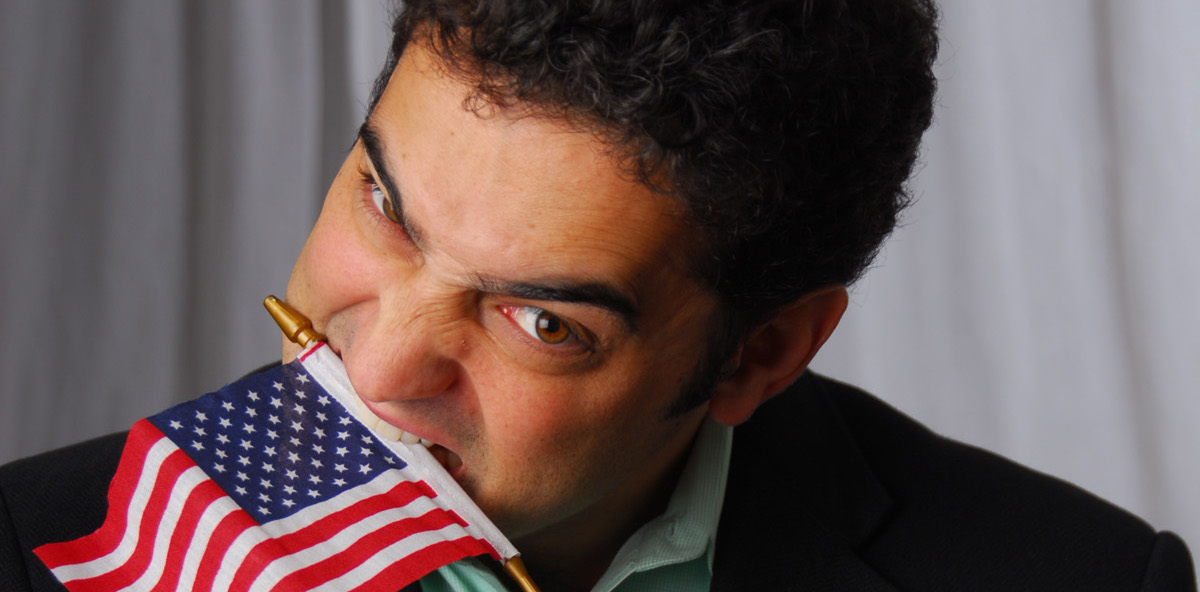
Howard Yaruss: Seeking Positive Change
Howard Yaruss’ reading list
9 books mentioned in this interview
- Freedomland: Co-op City and the Story of New York · Annemarie H. Sammartino
- Understandable Economics
- Poison Ivy: How Elite Colleges Divide Us · Evan Mandery
- Good Economics for Hard Times · Abhijit V. Banerjee and Esther Duflo
- Macroeconomics · Paul Krugman and Robin Wells
- The Grapes of Wrath · John SteinbeckRecommended 8 times
- Anne Frank: The Diary of a Young Girl · Anne FrankRecommended 4 times
- The Death and Life of Great American Cities · Jane Jacobs
- A Monetary and Fiscal History of the United States, 1961–2021 · Alan Blinder
Howard Yaruss is an economist, professor, attorney, businessman, and activist who greatly enjoys explaining complex issues in a clear, interesting and easily accessible way. He has taught a variety of courses on economics and business, and currently teaches at New York University. Previously, he served as Executive Vice President and General Counsel of Radian Group, one of the largest guarantors of debt in the world. He has also served on the Boards of organizations that advocate for safer streets, help the homeless and support the arts. Yaruss graduated from Brown University, studied at the London School of Economics and earned a law degree from the University of Pennsylvania. He lives in Manhattan and serves on his local community board.
Enjoy our interview with Howard Yaruss…
When and how did you first become interested in economics?
I grew up in Brooklyn in a family that often faced financial difficulties and started working in my early teens in my father’s grocery store. These experiences made me painfully aware of the great disparities in education, security, material well-being and opportunity in our society. I saw how these inequalities caused some people to become cynical, resigned, or indifferent — while others became determined to overcome them. I became fascinated by them. I felt that if I wanted to live in a more just and productive society, I first had to understand how it worked.

What is something about you that people might find surprising?
That I went to a failing high school and felt unprepared for college. In fact, my high school was so bad that it was shut down not long after my graduation.
What are you reading at the moment and what made you want to read it?
I am reading Freedomland: Co-op City and the Story of New York by Annemarie H. Sammartino. It traces the first twenty-five years of Co-op City in the Bronx. I am fascinated by the attempt to build well-functioning affordable housing in New York City and the social, cultural and economic issues such development raises.

Tell us about your motivation and reasoning for writing your book, Understandable Economics.
There is so much discontent and frustration with our current economic system. This has resulted in a wide range of reactions from Occupy Wall Street to the election of Donald Trump. The one thing all of these reactions have in common is that they haven’t resulted in any significant positive change in the lives of most Americans. I wrote the book seeking to change that. I believe that if more of us were armed with a better understanding of how the economy works, more constructive solutions for the problems we face would get implemented, and we would finally see the economy improve for the average person.

What was the last book you purchased, and why did you buy it?
Poison Ivy: How Elite Colleges Divide Us by Evan Mandery. I believe education is the key to a more productive, equitable and happier society and I am troubled that our best universities may not be achieving as much for our society as they could. That is what interested me in a book which critiques their role.

What book have you found most inspiring, what effect did it have on you?
I don’t have the title or author of this book for the following reasons: In fifth grade, I was barely reading at a first-grade level. My teacher said to forget the assigned stories for the fifth graders (which were pretty bland) and the matrix we had to fill in describing the characters in the stories, what they were doing, and what happened to them. Instead, she gave me a biography of Benito Juárez, who was born into poverty and rose to become President of Mexico by fighting for the rights of poor farmers and working to make a better nation.
I think she thought that I would be inspired enough by his story to figure out how to read the book (and overcome what was later diagnosed as dyslexia). She could not have been more right. It launched a lifetime of reading and working to promote a more productive and equitable society.
Why do you think it’s important for people to have a better understanding of how the economy works?
An understanding of how the economy works would enable people to better identify solutions for the problems we face, assess which politicians are proposing policies that would grow our economy and provide more opportunity, advocate for solutions with the strength that an understanding of the economic system brings, and defend those solutions against the inaccurate criticisms so prevalent in the media. The original subtitle for the book was “Because You Can’t Improve a System You Don’t Understand.”
What’s the best book you’ve read in the last 6 months?
Good Economics for Hard Times by Abhijit V. Banerjee and Esther Duflo which discusses inspiring ways economies can be improved.

What is your proudest achievement?
I actually have two. One is writing this book (which represents a lifetime of learning about economics and related subjects) and having it well-received. The other is a great marriage.
What’s the greatest book on economics ever written?
There are so many “great” books on economics that have added significant bits and pieces to my understanding of the subject. Therefore, I cannot single out one as the “greatest.” That said, many years ago, I was teaching a macroeconomics course and read Macroeconomics by Paul Krugman and Robin Wells, the textbook, cover to cover. Like most textbooks, it does not provide any new insights, but it does summarize basic macroeconomics in a particularly accessible, well-written and comprehensive way.

If you could only teach the youth of today one thing about economics, what would it be and why?
That, although many economists may be reluctant to admit it, economics is not a scientific discipline like physics or biology which requires expert knowledge and specialized tools to gain some basic understanding. Like psychology, economics is a social science, an attempt to understand human interactions and how they affect the world around us. It focuses on those relationships as they relate to money as well as the goods, services and resources money buys.
In order to tease out some precision regarding those relationships, professional economists use data and mathematical tools. But most of the fundamental relationships themselves can become apparent to anyone willing to observe the world carefully and apply their own common sense. (My book is designed to help them do that.)

If an alien landed in your garden; which three books would you gift them to showcase humanity in the best possible way?
Anne Frank: The Diary of a Young Girl by Anne Frank because of her irrepressible optimism.
The Grapes of Wrath by John Steinbeck because of the protagonist’s dedication to making the world a better place no matter the odds and the adversity they suffered.
The Death and Life of Great American Cities by Jane Jacobs because improving the world can begin at your own doorstep.


Which book sat on your shelf are you most excited about reading next and why?
I purchased A Monetary and Fiscal History of the United States, 1961–2021 by Alan Blinder a few months ago and look forward to reading it. I have read countless books about the Fed and Fed policy and, given past books by this author, expect to gain further insights into recent Fed policy.

If you enjoyed this interview with Howard Yaruss, be sure to visit his website and follow him on Twitter.
As an Amazon Associate we earn from qualifying purchases made through links on this page.