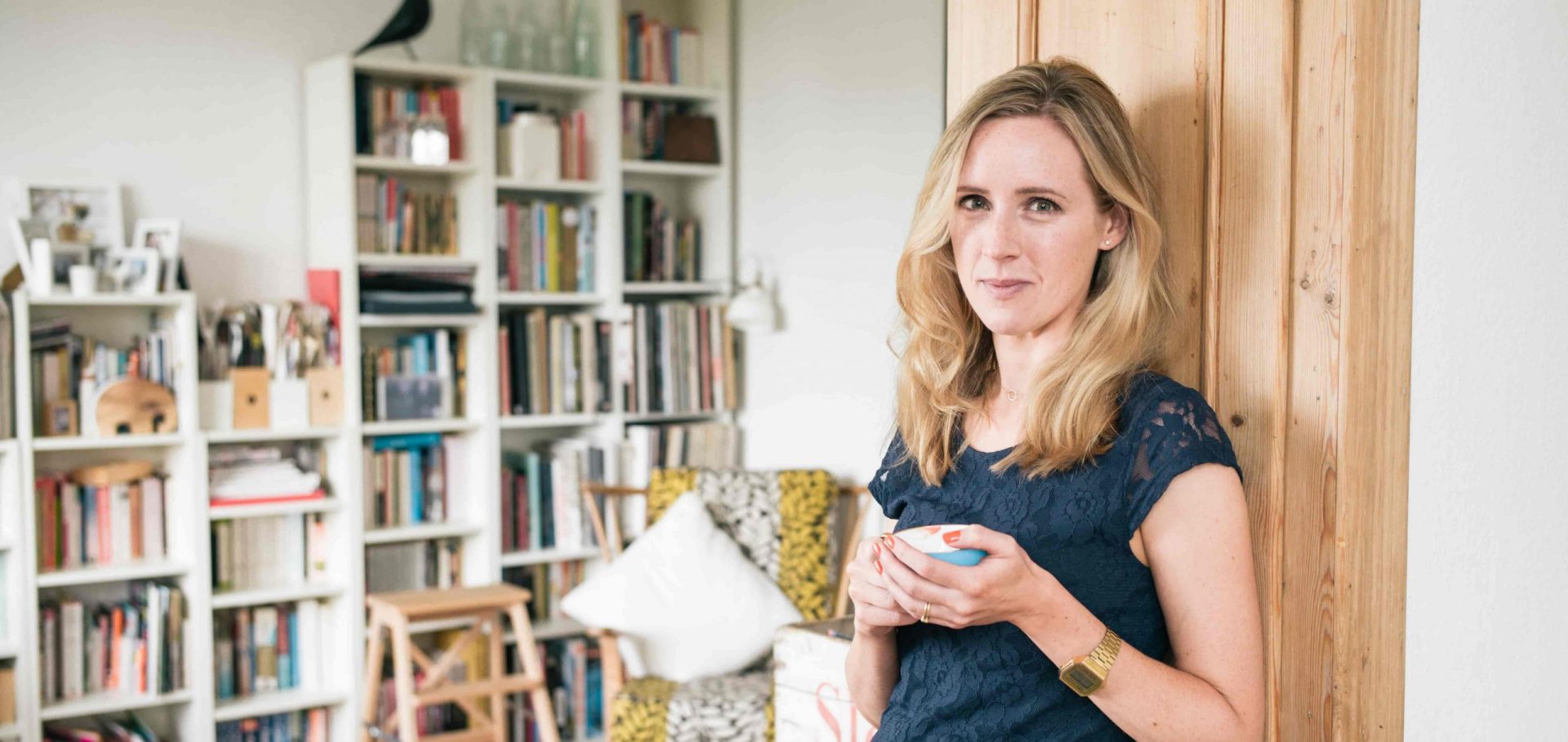
Helen Russell: You Have To Live It
Helen Russell’s reading list
18 books mentioned in this interview
- The Immortalists · Chloe Benjamin
- The Worst Witch · Jill Murphy
- The Party · Elizabeth Day
- Politics and the English Language · George Orwell
- A Room of One’s Own · Virginia WoolfRecommended 3 times
- My Judy Garland Life · Susie Boyt
- The Satanic Verses · Salman Rushdie
- Sexual/Textual Politics · Toril Moi
- LoveStar · Andri Magnason
- Paddington · Michael Bond
- The Very Hungry Caterpillar · Eric CarleRecommended 7 times
- The Guernsey Literary and Potato Peel Pie Society · Mary Ann Shaffer and Annie Barrows
- His Dark Materials trilogy · Philip PullmanRecommended 3 times
- How to be a Lion · Ed Vere
- The Power · Naomi AldermanRecommended 5 times
- The Versions of Us · Laura Barnett
- Elena Ferrante’s Neopolitan Novels
- Be More Pirate · Sam Conniff Allende
Books by Helen Russell: The Year of Living Danishly – Uncovering the Secrets of the World’s Happiest Country, Leap Year, Gone Viking, The Atlas of Happiness
Helen Russell is a British journalist, author and speaker. Starting off as a researcher for The Sunday Times, Helen Russell went on to work as a features writer on Take a Break and deputy editor at AllAboutYou.com. She then worked as features editor for Top Sante and on new launches for Tatler Asia, Grazia and Sky. Helen Russell joined Marie Claire as editor of marieclaire.co.uk in 2010 and was BSME-shortlisted in 2011 and 2012. She now writes for magazines and newspapers around the world, including Stylist, The Times, Grazia, Metro, and The Wall Street Journal. Helen Russell is a correspondent for The Guardian, has written a column for The Telegraph and is also available for commissions. Helen’s first book, The Year of Living Danishly – Uncovering the Secrets of the World’s Happiest Country was published in 2015 by Icon and is now a bestseller, published in 20 countries worldwide. Her second book, Leap Year, was published by Two Roads/John Murray (2016) and her debut novel, Gone Viking, was published by Ebury in 2018. Helen’s next book will be The Atlas of Happiness, published by Two Roads/John Murray in November 2018. Please enjoy my interview with Helen Russell.


How do you describe your occupation?
I’m a journalist and an author.
What is something about you that people might find surprising?
I am a magnet for the ridiculous and have to be open to new experiences to do my job so I’m regularly surprising even myself. I’ve got twins; a four-year-old; a paddleboard; an interior design obsessed husband; a mother who used to take me to Notting Hill Carnival; plus a superpower of finding things (and finding things out). I recently appeared on Japanese TV with a seven foot high Lego Man; gave a talk on leadership to the Welsh government; learned authentic Viking boat building techniques and axe throwing while seven months pregnant, and sexted a personal trainer (by accident).

What are you reading at the moment and what made you want to read it?
I’ve just been given a copy of The Immortalists by Chloe Benjamin because someone thought I’d love it – so I’m interested to read and see why. There’s sometimes a reluctance to press books onto a writer but I have eclectic and wide-ranging tastes so I’m always happy to read and learn more.

What was your favourite book as a child and why?
I loved The Worst Witch by Jill Murphy. The allure of magic was everything my overly active imagination desired and growing up as the only child of a single mum, the idea of boarding school with a battalion of pseudo-siblings appealed enormously.

Can you talk us through your research process when preparing for a new book?
It all starts with big paper. I’ll use a roll of kids’ drawing paper for a few weeks, scribbling and doodling, before eventually coming up with a spider diagram and then hopefully a semi-legible synopsis I can knock into shape. For non-fiction, I’ll then divide the research up by topic and start a hit list of who I’d like to speak to and what areas I need to delve into further – though this will change and morph with every new thing I learn from the experts and interviewees I speak to. If there’s something I need to road test for myself, I’ll plan out how long I need to trial it thoroughly and make sure I can do this justice before I start writing (thus sexting a personal trainer for Leap Year). For fiction, I’ll sketch out a storyboard, then look at where there are gaps in my knowledge and work out who I need to speak to or what I need to do to fill these (thus Viking boat building and axe throwing for Gone Viking).
What was the last book you purchased, and why did you buy it?
The Party by Elizabeth Day – she’s a fellow writer and author and I’ve always enjoyed her work and wit.

For someone starting out in your career, which three books would you make required reading and why?
The most important thing is reading. Lots. Good and bad – so that you have something to aim for and so that you start to recognise where things can go wrong. The Writers and Artists Handbook is great for information on agents and publishers, but my other two recommendations would be essays. Politics and the English Language by George Orwell is essential for anyone keen to avoid the major pitfalls of writing and A Room of One’s Own by Virginia Woolf should be mandatory to help everyone check their privilege and learn a little more about the context within which we write and read.


What book have you found most inspiring, what effect did it have on you?
It’s impossible to pinpoint just one, but I remember vividly that My Judy Garland Life by Susie Boyt made me feel as though it was okay to be me – that being sensitive and a daydreamer could be an asset. The best kind of writing makes you feel less alone and this one made me weep with recognition. I made my mum read it and she said something along the lines of: ‘Now, I get you.’

What’s the most obscure book you own; how did you discover it?
My toddlers regularly scale our bookcases and tear down choice volumes (I caught my one-year-old with The Satanic Verses by Salman Rushdie the other day) and a few gems I have rediscovered as a result include Sexual/Textual Politics by Toril Moi and a Penguin guide to the roads of the North of England from the 1950s. Both illuminating in very different ways.


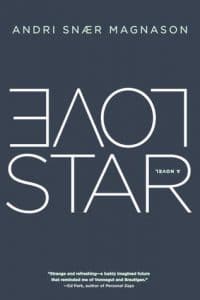
What’s the best book you’ve read in the last 6 months?
LoveStar by Andri Magnason, a friend of a friend, blew my mind. I approached the book without any expectations but was inspired by his enormous imagination and the questions he poses and prompts for humanity at large.

What is your proudest achievement?
Staying semi sane in the face of three children and three books in three years (often on three hours’ sleep) is definitely up there. Carving out a career from scratch in Denmark after I left my glossy magazine job and 12 years in London was tough, but I feel proud that I’ve made it work. I love what I do now – work is more fun than fun for me (and I really like ‘fun’). For years I was stressed, tired all the time and struggling to start a family – trying every fertility treatment under the sun. Something had to give, and it was scary to make a change – but it paid off. Now I have the family and career I wanted.
What two pieces of advice would you give a young aspiring writer?
Start today.Don’t just think about it: do it. Because if you don’t like the doing part, you’re not going to get anywhere. I’m a firm believer in Malcolm Gladwell’s idea that you have to put in 10,000 hours to get really good at something when it comes to writing. So put in the hours – even if it means you don’t get published for a while. And only do it if you love it – because it isn’t an easy option. It’s an unusual lifestyle and a lot of work. I sweat when I write – it becomes a physical thing, acting out dialogue and blocking movement. You have to live it.
If you were trying to impress a visitor, which book that you own would you leave on the coffee table?
I’m so over impressing people. Our coffee table is currently buried under snacks, wet wipes, Paddington by Michael Bond and The Very Hungry Caterpillar by Eric Carle, so they’re welcome to these.


If an alien landed in your garden; which three books would you gift them to showcase humanity in the best possible way?
Fiction deals with drama, where typically people aren’t behaving in the best possible way – and perhaps it’s the cynical Brit in me, but I’m not great on saccharine endings in my non-fiction either. If I had to pick (other than mine, of course…) I’d go for The Guernsey Literary and Potato Peel Pie Society by Mary Ann Shaffer and Annie Barrows. For any adolescent aliens, I’d prescribe His Dark Materials trilogy by Philip Pullman and for new alien readers, I’d bypass human protagonists altogether and offer them the beautiful and poignant allegory How to be a Lion by Ed Vere.
- The Guernsey Literary and Potato Peel Pie Society by Mary Ann Shaffer and Annie Barrows
 The Guernsey Literary and Potato Peel Pie Society by Mary Ann Shaffer and Annie Barrows
- His Dark Materials trilogy by Philip Pullman
 His Dark Materials trilogy by Philip Pullman
- How to be a Lion by Ed Vere
 How to be a Lion by Ed Vere
Are there any books you haven’t mentioned that you feel would make your reading list?
The Power by Naomi Alderman, The Versions of Us by Laura Barnett, Elena Ferrante’s Neopolitan Novels have all stayed with me long after I read them in the past year.


Which book sat on your shelf are you most excited about reading next and why?
Be More Pirate by Sam Conniff Allende. A friend heard him give a talk about how the innovative strategies of Golden Age pirates can be updated to form a clear set of solutions for the challenges of the 21st Century – and now I’m fascinated to find out more.

If you’d like to learn more about Helen Russell, you can find her on her website and Twitter.
Image credit: Jonas Husballe Normann
As an Amazon Associate we earn from qualifying purchases made through links on this page.


