
Guillem Balague: Books Are An Extension Of Ourselves
Guillem Balague’s reading list
6 books mentioned in this interview
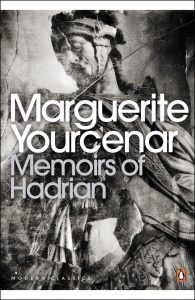
- Memoirs of Hadrian · Marguerite Yourcenar
- I, Claudius · Robert GraveRecommended 3 times
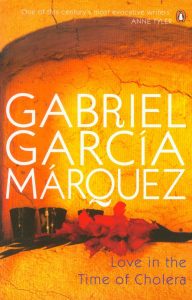
- Love In The Time Of Cholera · Gabriel Garcia MarquezRecommended 4 times
- Silk · Alessandro Baricco
- The Old Man and The Sea · Ernest HemingwayRecommended 9 times
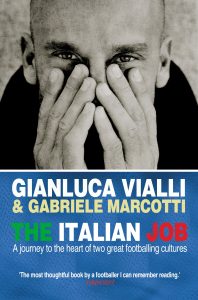
- The Italian Job · Gianluca Vialli and Gabriele Marcotti
Books by Guillem Balague: A Season on the Brink: Rafael Benitez, Liverpool and the Path to European Glory, Brave New World: Inside Pochettino’s Spurs
Guillem Balague is a Spanish football journalist, author and pundit. He is a regular pundit on Sky Sports’ show Revista de la Liga and has also written for some of Britain’s newspapers as well as several Spanish newspapers. In June 2008, Guillem Balague launched his own personal website featuring a blog, news and the opportunity to interact with him directly. He has written articles in British newspapers The Times and The Observer, as well as a weekly column in the free daily commuter newspaper The Metro commenting mainly on stories involving continental football. Guillem Balague also occasionally writes for sports website Bleacher Report. Guillem Balague was a co-host, along with Gabriele Marcotti, of TheGame, a football podcast hosted by The Times, for the 2007–08 Premier League season. In 2005, Guillem Balague wrote a book called A Season on the Brink: Rafael Benitez, Liverpool and the Path to European Glory after their Champions League victory over A.C. Milan in Istanbul in 2005. He has subsequently written books on Pep Guardiola, Lionel Messi and Cristiano Ronaldo. This year, he has released his new book Brave New World: Inside Pochettino’s Spurs about Mauricio Pochettino. Please enjoy my interview with Guillem Balague.


When someone asks you ‘what do you do for a living?’ – How do you respond?
If it’s in a professional context or with students, I tend to say ‘I communicate’, by which I mean I communicate in many different forms; I write books, I write articles and I do television, radio. But, if it’s anybody else I’d just say ‘I’m a journalist’.
What are you reading at the moment?
I am re-reading Memoirs of Hadrian by Marguerite Yourcenar. I’m interested in memoirs written in the first person by somebody else, which is what inspired my book Brave New World. I also enjoyed the similar book I, Claudius by Robert Grave. I remember really enjoying Memoirs of Hadrian the first time I read it a long, long time ago, so decided to revisit it.

What’s your earliest memory of reading?
I used to read the sports newspaper. For those of you who were in Spain, forty years ago, you may remember the newspaper Decin, it was a brown, thick newspaper. I used to read it before I even really could understand what I was reading, perhaps around the age of eight, but I liked the idea of holding a newspaper in my hands.
Can you remember your first job in football journalism – what was it, and how did the opportunity present itself?
When I finished University, I was given the opportunity to do three months work experience. I completed mine at a press agency that followed famous people and did interviews with them. That was my first job, which I managed to get through my University.
What is the worst job you’ve ever had?
I didn’t like working behind the bar in Liverpool. I wasn’t made for it. I was effective and did what I needed to do, but I didn’t realise that you have to be happy, cheerful and show personality constantly. I just focused on doing that job, and perhaps didn’t engage with the customers. I wasn’t so good at it, and was told that a few times!
What two pieces of advice would you give a young aspiring football journalist?
Firstly, we are only a microphone. That’s the most important thing to remember. A lot of people get into journalism so that they can have their opinions heard, but that’s not journalism. We are the mediators.
Secondly, remember that it is a long-term game. So don’t try to do things that will give you an immediate gain when it might be damaging long-term. So if you want to win the trust of people, you may not be able to write the first, second or third story you know about them, you may need to keep it to yourself.
How do you manage to get all of the insider information that allows you to be one of the world’s most respected football journalists?
I develop relationships with people, gaining their trust. A lot of the time, it’s about mutual respect. I believe it comes down to what kind of person you are, and I think I have gained a lot of friends in football because they know I won’t stitch them up, but they also understand what my job is. Having said that, there have been cases of people letting me down and giving me the wrong information. I always find out why afterwards, but by then it is perhaps too late. But whoever does that ceases to be a source for me, and it’s happened two or three times. But you have to accept that it is part of the game. For instance, when Xabi Alonso decided to leave Real Madrid, I was told by two different people close to him that he was not leaving. But I was corrected by Bayern Munich, who told me it was in fact happening. So, in that situation – they used me and I had fallen into their trap, but I never forgot that and I didn’t use those two people as sources going forward.
What books do you feel are important reading for people on your career path?
The first thing to say is that it’s important to not think of football journalism as the main target. I know a lot of people are focused on becoming a football journalist, perhaps because of the glamour, but there is a lot of work behind it. If I had to start over, I would prepare in the same way that I did which is to become a journalist first. It’s important to come at it from all angles, understanding how life works and learn through not just reading textbooks on journalism but also through novels. Read a lot of novels. Those who read my books will know that I read a lot of novels; I use a lot of tricks that you’ll find in literature. This is as a result of the reading I’ve been doing all of my life, and it helps you set yourself apart.
Is there a book that you’ve read more than once? What is it and why did you revisit it?
As I mentioned earlier, I’m currently rereading Memoirs of Hadrian by Marguerite Yourcenar. But, I loved Love In The Time Of Cholera by Gabriel Garcia Marquez, because it is a simple way to tell a story. It’s not a complicated story, but it’s the atmosphere that Gabriel Garcia Marquez creates that I like to revisit and immerse myself in.

What book have you recommended the most to friends and family?
I recommend Silk by Alessandro Baricco, it’s a small book but I recommend it to people who don’t read. I tell them to read this, and you will fall in love with reading. The greatest reward I’ve ever had with my books is when I hear from people who tell me they don’t usually read, but through reading my books they have been inspired to read other books. That for me is the biggest reward, by a long way.

Who would you say are the three most interesting characters to write about in the world of football – and why?
I’ve been lucky enough to write about these people. I find Lionel Messi and Cristiano Ronaldo fascinating for different reasons, who are two people we have to respect fully because of the journey they have been on. At the moment, I find Mauricio Pochettino and Pep Guardiola interesting, I’ve been writing about them. The problem for me is to find the next one because my contract with Orion includes an extra book – and I haven’t decided yet what to write about.
What’s your favourite genre of book?
I love novels, literature, any story well told that makes me forget where I am, what I do and where I’ve been. It’s not easy to find those books, I find them more in literature from the last 50 years or so rather than from recent years. I’m sure there are some more recent novels that will give me that similar feeling, but my favourite period for books is between 1950 and 2000.
What do you think a world without books would be like?
Books are an extension of who we are. We have developed an intelligence that requires communication, words and language so it would be a world full of storytellers like it used to be. Actually, this idea of theatre that you can tell a story, but as soon you tell it, you can not touch it or hold it, you can only keep it in your mind to take with you.
Is there an author whose writing you’re such a fan of, that you’ll read everything they release?
There are, they are mostly Spanish. I’d have to include Alvaro Pombo, Javier Marias, Mario Benedetti and Julio Cortazar. I love Cortazar’s short stories, and in fact, I was going to use one to tell the story of Pochettino – but I decided against it.
What work are you most proud of in your career as a football journalist?
I really enjoyed following Spurs for a year for my book Brave New World. I’ve also enjoyed following Liverpool for their first year with Rafa Benitez, I’ve enjoyed the work I’ve done on Messi and Ronaldo. I enjoyed writing all of my books, but to get away from books for a bit, I’m very proud of the show Football First in Europe, with Adrian Durham and Gabrielle Marcotti, on TalkSPORT, a 3-hour show on Mondays, 7pm-10pm. It was very enjoyable, and there was a lot of work behind it. The conversations were fantastic. But perhaps what I’m most proud of is Revista De La Liga on Sky Sports. I feel very proud of it, it was an idea I had early on and Sky went for it. It developed and evolved, but we created something very special.
If you had to assemble a 5-a-side football team of all-time greats, who would make the team?
Well, I would be the coach. I’d have Thomas N’Kono in goal, Carlos Puyol, Zinedine Zidane, Lionel Messi and Michael Laudrup. It’s not necessarily the best, but instead, it is the team that I’d enjoy coaching.
What is the book that you feel has had the single biggest impact on your life? What impact did it have?
It would be The Old Man and The Sea by Ernest Hemingway. I read it in one night, and it just made me realise that a good book is one you cannot put down. It made me want to write. I always felt like I had a book in me, but that book gave me the impetus to write. I look back at that book and ask myself how he did he do that? Was it the structure, the story, was it the way he wrote it? it made me think about how to write a book.

Are there any books you haven’t mentioned that you feel would make your reading list?
I haven’t mentioned any football books! But there is one book that I recommend to everybody, The Italian Job by Gianluca Vialli and Gabriele Marcotti. It was a great concept, comparing English and Italian football and culture – that you can still learn from today. I’d also include anything by Raphael Honigstein, especially his book on German football and how they got to the top. Perhaps, even better and funnier is how he explains English football to the Germans.
What books or subject matter do you plan on reading in the next year?
I tend to read one book about football or whatever it is I’m writing about, whilst simultaneously reading a literary work. I have a long list of books that have been recommended that I have on my Kindle, especially Spanish literature. I do enjoy reading English literature but Spanish is my original language and it enriches my Spanish and I can see the intentions of the writer easier. I want to get to read more Spanish literature from the past ten years because I feel I have neglected it slightly.
If you were to write an autobiography – what would it be called?
I don’t think I will ever write an autobiography, so if I did it’d probably be called The Autobiography That I Never Wanted To Write.
If you’d like to learn more about Guillem Balague, you can find him on his website, Facebook and Twitter.
As an Amazon Associate we earn from qualifying purchases made through links on this page.
You might also like
Adam Martinakis: Passion for Creation will Always Bear Fruits
Interview · 21 November 2016

Phil Treagus-Evans: Creating things of value
Interview · 1 May 2025

Richard Johnson: A Historically Inflected Approach
Interview · 19 January 2021

An Interview with Shane Joseph: The Page Is Sacred
Interview · 16 May 2019