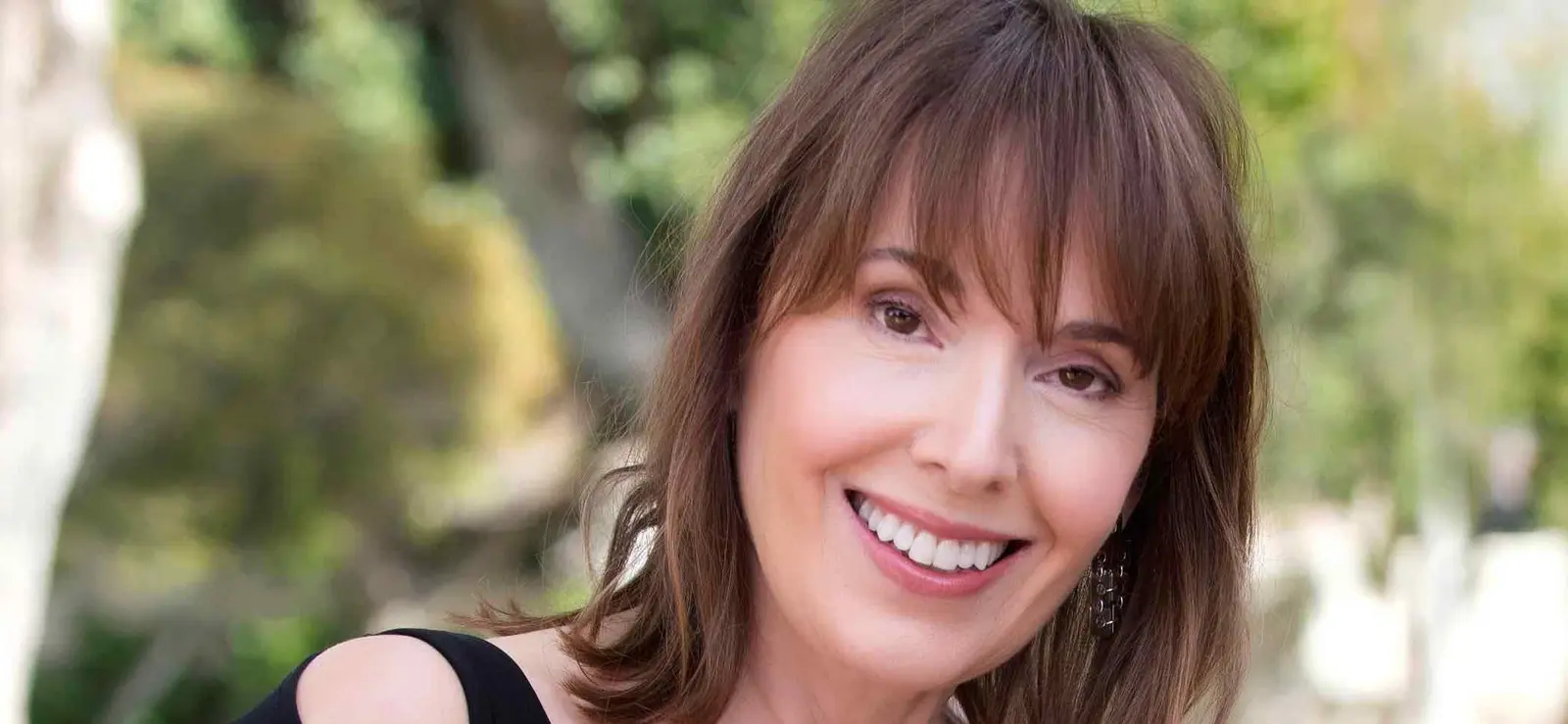
An Interview with Elizabeth Hutchison Bernard
Elizabeth Hutchison Bernard’s reading list
12 books mentioned in this interview
- An American Wife · Curtis Sittenfeld
- Nancy Drew Mysteries · Carolyn Keene
- The Time Machine · H.G. WellsRecommended 5 times
- Affinity · Sarah Waters
- Bone River
- Inamorata
- I ChingRecommended 4 times
- The Women · T. C. Boyle
- A Gentleman in Moscow · Amor TowlesRecommended 6 times
- Cutting for Stone · Abraham VergheseRecommended 3 times
- The Underground Railroad · Colson WhiteheadRecommended 3 times
- Exit West · Mohsin HamidRecommended 3 times
Books by Elizabeth Hutchison Bernard: The Beauty Doctor, Temptation Rag
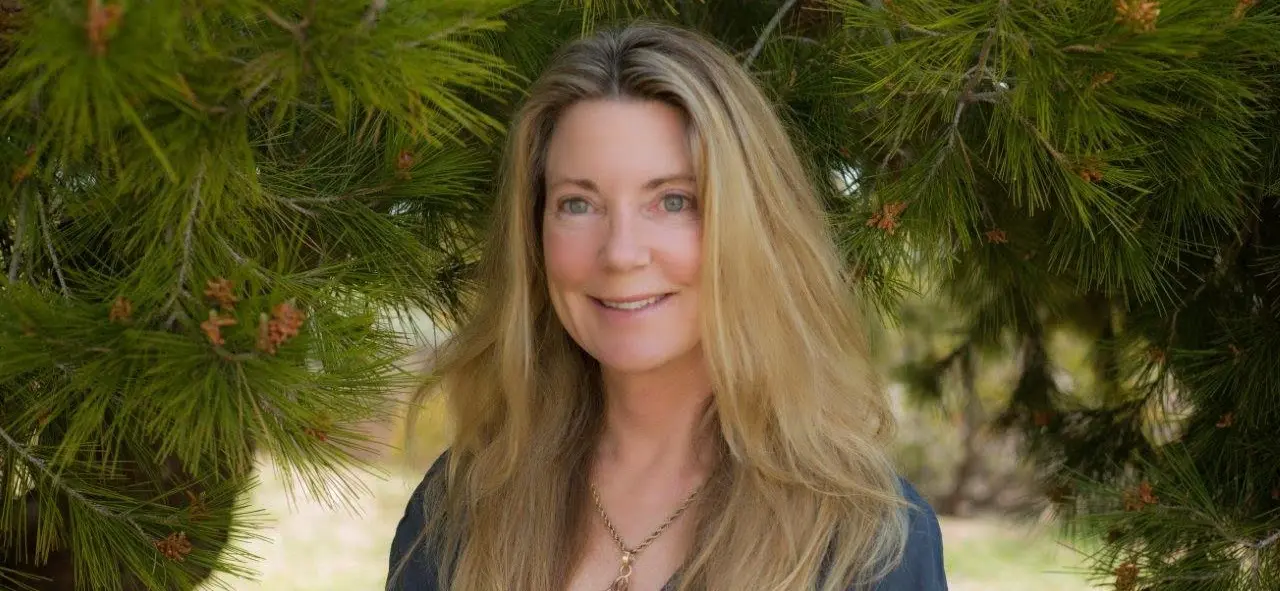
Elizabeth Hutchison Bernard is an award-winning author of historical fiction. However, her first love was music. As a vocalist, flutist and songwriter, she toured for nearly a decade. Her musical compositions range from rock to pop to smooth jazz and New Age. In 1997, she moved to New York City where she was the Communications Director for the American Society for Aesthetic Plastic Surgery. Elizabeth Hutchison Bernard was instrumental in founding the internationally subscribed Aesthetic Surgery Journal and served as its Executive Editor. Later, she was a primary consultant to the National Cosmetic Network, in partnership with the plastic surgery program of Johns Hopkins University. Elizabeth Hutchison Bernard’s in-depth knowledge of plastic surgery lends a unique perspective to her historical novel The Beauty Doctor, while music takes centre stage in her 2018 release Temptation Rag. Both stories are set in turn-of-the-century New York City.
Temptation Rag by Elizabeth Hutchison Bernard is available now.
Please enjoy my interview with Elizabeth Hutchison Bernard.


When someone asks you ‘what do you do for a living?’ – How do you respond?
I am a full-time author who is fortunate enough, after working very hard in my earlier careers, not to have to depend on my book royalties for “a living.” It takes a lot of the pressure off and allows me to approach my writing from a purely artistic perspective. Pretty cushy, I know! But I put in my time.
What are you reading at the moment?
An American Wife by Curtis Sittenfeld. It’s a very long book, and it’s really interesting to me the way the author draws out the story without making it seem that it is moving too slowly. I like that it is told in the first person and the character, in her later years, is looking back on events – something I am doing through the protagonist in my third (and next) novel. I enjoy reading things that relate in some way to whatever project I’m working on at the time, though Sittenfeld’s story (based loosely on the life of Laura Bush) is a world away from the subject matter of my next book.
What’s your earliest memory of reading?
As a kid, I loved to wake up very early on a weekend morning and read in bed. My best reading adventures at that time were the Nancy Drew Mysteries by Carolyn Keene. My mother had saved all her hard-copy volumes from when she was a girl. She had the whole series. Those books felt so special to me. Wish I knew what happened to them. I can’t believe I let them get away!

If you could encourage young people to read one book in particular, what would it be and why?
Wow, I don’t know that I could prescribe one particular book for all young people to read. I’d rather say, pick up a book that really calls to you so that you love the experience of reading it. And then you’ll naturally want to pick up another book and another. If you love ghosts, pick a ghost story. If you love sports, select something that deals with that. Develop a love for reading and eventually you will get to the more profound stuff that makes you think about life and what it’s all about.
Can you remember the first story you ever wrote?
Yes, I wrote it in the summer between fifth and sixth grades. I taught myself to type and spent the whole summer up in my brother’s bedroom, sitting at his desk, banging away on that typewriter. I ended up with 50 pages of a mystery featuring teen-aged twins, a blond and a brunette with ponytails, who end up in a deserted and probably haunted house searching for stolen jewels. I have no idea how it ended, because I never finished it. I did show it, however, to the librarian at school who assured me I could get it published. No one since has ever been quite so unequivocal about my writing talents.
What is the worst job you’ve ever had?
For a few months when I was in my early 20s, I lived about ten miles from the Gulf of Mexico, technically in Alabama, as I was waiting for my music career (career #1) to take off. In the meantime, being hard up for cash, I got a job with a professional landscape crew that was doing a big hotel job. As those kinds of jobs go, it was very high-paying, and this was at a time when women didn’t have equal opportunity in the workplace. I was, in fact, the only woman they hired. The problem was, after two days on the job, the foreman informed me that he would pick me up at 8 o’clock that night, and we were going out. When I said no, he fired me. I guess what makes it the worst job I ever had is that I never was paid for the two days I worked, and I was pretty mad about the whole thing.
What two pieces of advice would you give a young aspiring writer?
Write what you love to read. I attempted a few books in my younger years but made the mistake of thinking about writing too much as a “commercial” enterprise. I ended up writing in a genre that I didn’t even like to read myself, just because I thought I could succeed more quickly that way. Bad idea—at least it was for me, because in my heart the only thing that ever really mattered to me was becoming an artist. The second piece of advice: keep at it. I didn’t do that right either! On the other hand, it took me a long time before I truly believed I had anything important to say. So . . . while it would have been great, I suppose, if I were more persistent early on, I probably needed to evolve a bit more as a person.
Do you read as much as you’d like to?
No, definitely not. I have such a long list of books waiting to be read, but now that I am working on my third novel, I also have a ton of research to do, most of which involves reading. Therefore, I have to put some of my “pleasure reading” aside. Of course, I really enjoy the reading I do for my research. Especially with my next book involving the spiritualist movement of the late 19th Century, it’s really fascinating stuff.
What books do you feel are important reading for people on your career path and why?
I love to read and re-read the classics, and I think it’s important for any writer of historical fiction to have that grounding.
Is there a book that you’ve read more than once? What is it and why did you revisit it?
A number of the classics. The Time Machine by H.G. Wells is one. Why did I re-read it? The protagonist in my historical thriller The Beauty Doctor mentions it in conversation early in the story, and I had to find out why. That sounds strange, I know, but sometimes I write that way—with the characters themselves leading me. I sensed the reference to that book foreshadowed what was to come later in the novel. But I didn’t remember the story of The Time Machine too well, so I had to re-read it to discover one of my themes.
What book have you recommended the most to friends and family?
I like somewhat “dark” and gothic-inspired stories, so I have often recommended Affinity by Sarah Waters.

Who would you say are the three writers that continue to inspire you?
I have become friends with Megan Chance, bestselling author of Bone River and Inamorata, and our friendship began when I contacted her by email to say how much I enjoyed her writing and to ask for advice. She was so gracious in making recommendations that really helped me at that early stage in my writing career. I continue to be inspired by her as a writer and a friend. I also love Sarah Waters and Sue Monk Kidd.


What’s your favourite genre of book?
No question that it’s historical fiction. I really have to kick myself a bit to move outside the genre, but when I do, I usually enjoy the change and learn a lot of new things.
What do you think a world without books would be like?
A world without books would have to offer some other way to deeply immerse oneself in another life or another time and place. For example, if we were able, in some controlled manner, to merge our personal digital reality with another—forgive me, I’m not a physicist! But I love the idea of a digital universe where the normal boundaries we take for granted don’t exist. Of course, as a writer I would be very frustrated if no one read books. I have to admit, however, that I still consider music to be a “higher” form of communication than language.
Is there an author whose writing you’re such a fan of, that you’ll read everything they release?
My habits are not quite that linear. I bounce around a lot, depending on what direction my own creative juices are flowing at the moment. I guess that implies a certain lack of loyalty. I admit I often forget authors’ names, even if I loved their books! As an author myself, I feel quite guilty about it.
Do you think digital books will ever completely replace real books?
I think probably so. But old books will still be treasured.
What book do you feel humanity needs most right now?
One that shows how we might get along with one another better. I thought about tackling that as my next book, in a roundabout way, but the storyline was ending up as being too political. And right now, I’m pretty sick of politics. So I decided to write about something light – like the quest for immortality and the reconciliation of idealism and materialism. We’ll see how that turns out.
What is the book that you feel has had the single biggest impact on your life? What impact did it have?
I Ching. It’s an ancient Chinese book of divination. It contains an immense amount of wisdom, beautiful symbolism, and I have been studying it for many years. It helps me with my writing as well as with life in general.

Are there any books you haven’t mentioned that you feel would make your reading list?
A Gentleman in Moscow by Amor Towles. Cutting for Stone by Abraham Verghese. The Underground Railroad by Colson Whitehead. Exit West by Mohsin Hamid. The Women by T. C. Boyle.
- The Women by T. C. Boyle
 The Women by T. C. Boyle
- A Gentleman in Moscow by Amor Towles
 A Gentleman in Moscow by Amor Towles
- Cutting for Stone by Abraham Verghese
 Cutting for Stone by Abraham Verghese
- The Underground Railroad by Colson Whitehead
 The Underground Railroad by Colson Whitehead
- Exit West by Mohsin Hamid
 Exit West by Mohsin Hamid
What books or subject matter do you plan on reading in the next year?
I’m doing a lot of reading now on spiritualism at the turn of the century in Great Britain. I’m also reading up on Scottish history. I’m going on a research trip to the U.K. this summer. As far as what I will read for pleasure, I’m sure there will be a lot of historical fiction and a smattering of other things as well.
If you were to write an autobiography – what would it be called?
How I Finally Ended Up in the Place I Always Wanted to Be
If you’d like to learn more about Elizabeth Hutchison Bernard, you can find her on her website and Twitter.
As an Amazon Associate we earn from qualifying purchases made through links on this page.