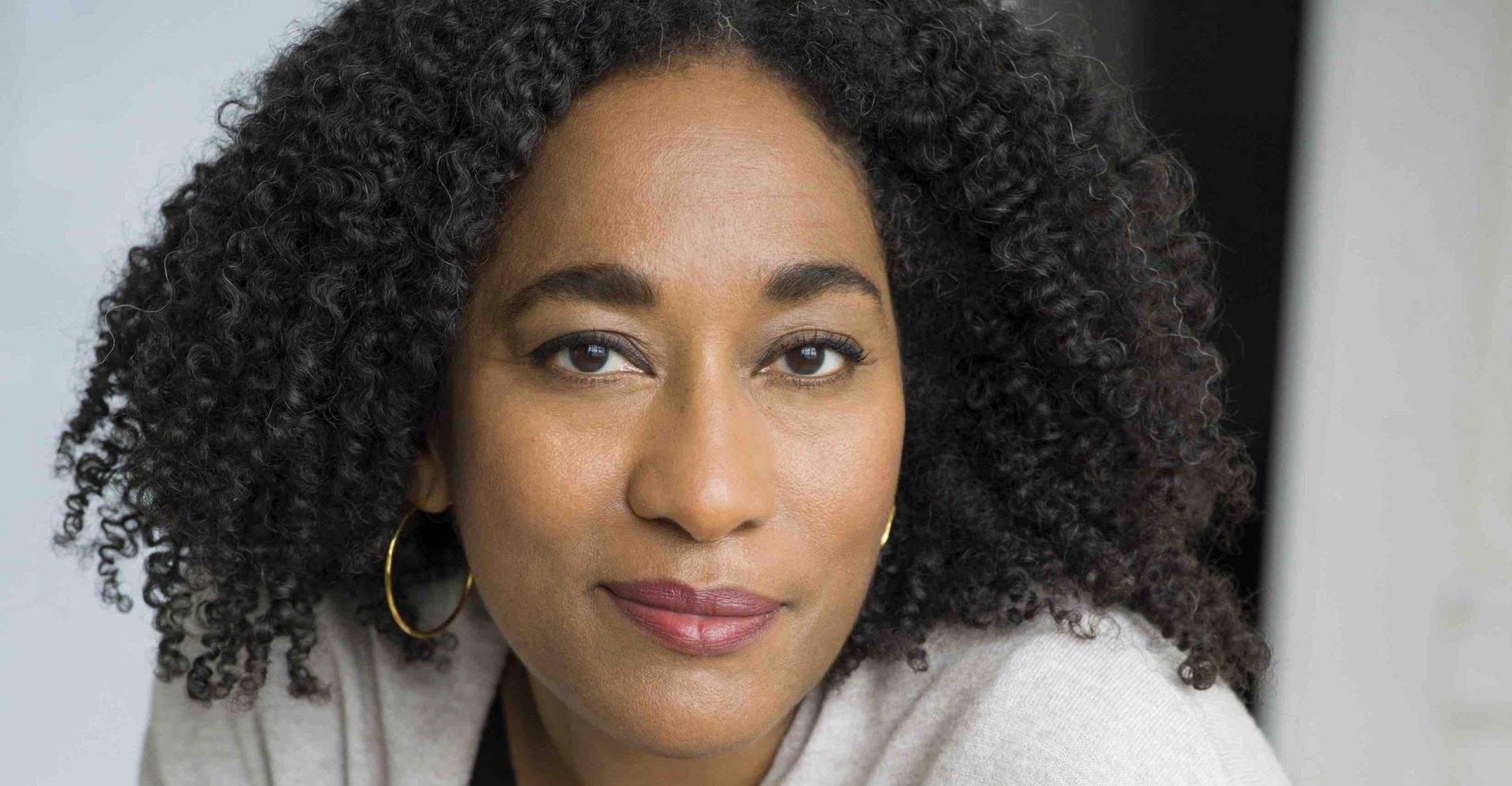
Ann Kring: Transported By Story
Ann Kring’s reading list
19 books mentioned in this interview
- Never Anyone but You · Rupert Thomson
- How to Change Your Mind: What the New Science of Psychedelics Teaches Us About Consciousness, Dying, Addiction, Depression, and Transcendence · Michael PollanRecommended 5 times
- Dopesick · Beth Macy
- Insane: America’s Criminal Treatment of Mental Illness · Alisa Roth
- The Recovering: Intoxication and its Aftermath · Leslie Jamison
- Desert Solitaire · Edward Abbey
- Go Dog GoRecommended 4 times
- The Story About Ping · Marjorie Flack
- The Power of Habit · Charles DuhiggRecommended 3 times
- How Emotions are Made · Lisa Feldman Barrett
- The Center Cannot Hold · Elyn Saks
- No One Cares About Crazy People · Ron Powers
- A Place for Us · Fatima Farheen Mirza
- Spoonbenders · Daryl Gregory
- Born a Crime · Trevor NoahRecommended 4 times
- White Houses · Amy Bloom
- The Word is Murder · Anthony Horowitz
- The Agile Gene
- The Common Good · Robert Reich
Ann Kring is Professor and Chair of the Department of Psychology at the University of California, Berkeley; having studied for her Ph.D at the State University of New York at Stony Brook. Ann Kring’s broad research interests are in basic emotional processes and how they go awry in different psychological disorders.
Ann Kring has studied emotional processes in schizophrenia, depression, social anxiety, and autism. Her current research is centered on the study of schizophrenia, with studies to assess the linkage between emotion and cognition in schizophrenia using behavior and brain imaging techniques; studies to assess the nature of anhedonia (i.e., diminished pleasure) in schizophrenia; studies to develop and validate a new clinical rating scale of negative symptoms in schizophrenia, and studies to develop and test a new psychosocial treatment for negative symptoms in schizophrenia.
Ann Kring’s work on basic emotion processes in healthy people has been focused on individual differences in expressive behavior, gender differences in emotion, and the linkages between personality, social context, and emotion. Ongoing studies seek to answer questions, such as under what circumstances and in the presence of what individuals might men and women differ in the expression of specific emotions. Please enjoy my interview with Ann Kring.
How do you describe your occupation?
I am currently Professor and Chair of the Department of Psychology at UC Berkeley.
Talk us through a typical day for you…
Some days, my day feels like I am dealing with emails all day, like a bird pecking at seeds in the field. For an ideal day, I deal with emails two times a day, meet with my graduate students, meet with Department staff, prepare for class or lab meeting, spend time working on papers for publication. I read at lunchtime – either professional work (journal articles) or fiction. I also read in the evenings, fiction most often.

What are you reading at the moment and what made you want to read it?
Fiction: Never Anyone but You by Rupert Thomson. I read a nice review of this and picked it up. I have become fonder of so-called historical fiction in the past several years… not sure why, but this one is a fictionalized account of two actual women (a writer and artist) who were in a long-term relationship that began prior to WWI and continued past WWII. It is a terrific story and beautifully written.
Nonfiction: I am reading or will soon begin several books related to psychology and the textbook I co-write:
How to Change Your Mind: What the New Science of Psychedelics Teaches Us About Consciousness, Dying, Addiction, Depression, and Transcendence by Michael Pollan – he is such a great writer and I enjoy all he writes. The topic of mind-altering substance (e.g., LSD, psilocybin) will be useful for my textbook that covers many different psychological disorders.
Dopesick by Beth Macy – she is a great investigative journalist (I loved her book Factory Manabout the furniture industry in North Carolina) and this covers the opioid crisis… something also of relevance to my textbook.
Insane: America’s Criminal Treatment of Mental Illness by Alisa Roth. This is a topic of great interest to me professionally and personally. Over the past 50 years we have criminalized mental illness. The largest “hospitals” for people with severe mental illness today are the Los Angeles County Jail, Cook County Jail, we continue to keep people with mental illness out of sight and we have switched from putting people in hospitals indefinitely (for good reason!) to putting them in jail.
The Recovering: Intoxication and its Aftermath by Leslie Jamison. This is a memoir about her own struggles with alcohol that also reviews the stories of other writers and creative people who have had issues with substances.
I am also slowly reading and savouring Desert Solitaire by Edward Abbey – a classic from the 1960s that I have never read before. I have a paperback that I carry with me and sneak in a few pages here and there as meditation.
- Never Anyone but You by Rupert Thomson
 Never Anyone but You by Rupert Thomson
- How to Change Your Mind: What the New Science of Psychedelics Teaches Us About Consciousness, Dying, Addiction, Depression, and Transcendence by Michael Pollan
 How to Change Your Mind: What the New Science of Psychedelics Teaches Us About Consciousness, Dying, Addiction, Depression, and Transcendence by Michael Pollan
- Dopesick by Beth Macy
 Dopesick by Beth Macy
- Insane: America’s Criminal Treatment of Mental Illness by Alisa Roth
 Insane: America’s Criminal Treatment of Mental Illness by Alisa Roth
- The Recovering: Intoxication and its Aftermath by Leslie Jamison
 The Recovering: Intoxication and its Aftermath by Leslie Jamison
- Desert Solitaire by Edward Abbey
 Desert Solitaire by Edward Abbey
Can you remember the first book you read by yourself?
I don’t recall exactly, but it may well have been the Dr. Seuss book Go Dog Go.
I watched the children’s TV show Captain Kangaroo, and they would read books on that show. I would then go to the library to get the book and come home and read it. This was not likely the first book I read, but I do remember one book from this show, it was called The Story About Ping by Marjorie Flack. It told the story of a young duck that got separated from its family because he was basically goofing off and didn’t want to be the last duck on the boat (to avoid getting whacked). He was captured by others but ultimately was reunited with his family. The lesson seemed to be better to be spanked than to goof off and go on your own lest horrible things happen to you. That is kind of a frightening story for a kid but I understand it was somewhat of a classic.
Later books I loved were the Nancy Drew, Hardy Boys, and Encyclopedia Brown mysteries. I still read mysteries today based on these early series, and enjoy series by authors like Sue Grafton, Nevada Barr, Jonathan Kellerman, Carrol O’Connell, Laurie King, Harlan Coben to name a few.


Are you a page folder or a bookmarker?
Bookmarker! In fact, I love to collect bookmarks from independent bookstores (that I love to support by buying a book) and national park sites. When I use these, I fondly remember the bookstore or the national park that I visited.
When did you fall in love with psychology?
Formally, when I was in high school. I took a college course during the summer after my junior year in high school at Ball State University. The professor, Arno Wittig, was simply fantastic. He was an energetic, enthusiastic, and engaging teacher. I became fascinated by the topic and decided I would major in psychology when I went to college (as it turned out, I went to Ball State University and majored in psychology).
Informally, I was interested in psychology before I knew it had a name. I was fascinated with understanding why people did the things they did. This interest came in part from my love of reading.

If you had to pick three books that would provide the best introduction to psychology, what would they be and why?
An introduction to psychology textbook is a good choice, but to be different, I will suggest three others that introduce key psychological concepts and research that are not textbooks.
The Power of Habit by Charles Duhigg – this is a great book that illustrates the principles of learning that also can be enormously helpful for people who want to understand their behaviour and want to change it.
How Emotions are Made by Lisa Feldman Barrett – this is a book that explains the science of emotion while giving a tour de force primer on neuroscience too. The author is a friend of mine but this only amplifies my recommendation because I know how smart she is!
The Center Cannot Hold by Elyn Saks. This is one of the greatest first-person accounts of schizophrenia ever told.
Because I cannot stop at three, I also recommend the heartbreaking yet beautiful No One Cares About Crazy People by Ron Powers that tells the story of how mental illness impacts families
- The Power of Habit by Charles Duhigg
 The Power of Habit by Charles Duhigg
- How Emotions are Made by Lisa Feldman Barrett
 How Emotions are Made by Lisa Feldman Barrett
- The Center Cannot Hold by Elyn Saks
 The Center Cannot Hold by Elyn Saks
- No One Cares About Crazy People by Ron Powers
 No One Cares About Crazy People by Ron Powers
If you could invite 5 authors (dead or alive) to a dinner party – who would they be and why?
Hope Jahren, Ellen Pao, Jennifer Palmieri, Sheryl Sandberg, and to moderate: Kara Swisher. All but Kara have written recent and great memoirs on female empowerment in science (Jahren) tech (Pao, Sandberg), politics (Palmieri). Kara Swisher has written books about tech but also has a great podcast (Recode Decode) where she interviews mostly people in tech but also women who have made a difference in their fields (e.g., recently Joanne Lipman, Nell Scovell). At this moment in time, getting these women together would be amazing and with all that brainpower could lead to ideas that could substantively change society with respect to women.
What was the last book you purchased, and why did you buy it?
A Place for Us by Fatima Farheen Mirza. Read a great review and wanted to dig into the story of the history of an Indian family.

What is your favourite thing about reading?
My favorite thing about reading fiction is the combination of being transported by a story and beautiful writing (e.g., anything written by Michael Chabon, Ann Patchett, Amy Bloom, among others). My favorite thing about reading non-fiction is learning something new and beautiful writing (e.g., books by Michael Lewis, Bryan Stevenson, Elizabeth Kolbert, Jill Lepore).
What’s the best book you’ve read in the last 6 months?
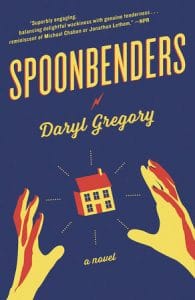
I have to say two: Born a Crime by Trevor Noah and White Houses by Amy Bloom. I also do a fair bit of listening to audiobooks. The best for me in the last 6 months here was Spoonbenders by Daryl Gregory and The Word is Murder by Anthony Horowitz. The narrator makes such a difference in audiobooks and these two have great narrators to go with great novels.


What advice would you give to a young aspiring psychologist looking to begin their career?
Read a lot and not just in psychology! Reading fiction and non-fiction will make you a better writer and help you understand people from all sorts of different perspectives.
In the world of psychology, what current research studies are you most excited about?
I am excited about neuroscience research that is helping us understand just how complex the brain is and how our behaviour influences our brain throughout the lifespan as much if not more than our brain influences our behaviour. I am also excited about genetics in the same way… fifteen years ago, Matt Ridley published a book called The Agile Gene – he was arguing that our genes do their work in our bodies through their interaction with our life experiences. Genetics research continues to support this key proposition. It is no longer correct to ask, for example in the case of mental illness, “Is it genetic?” Even if genes are involved (and we now know that many genes are involved), it is the interaction of these genes with our life experiences that combine to increase risk for mental illness.

Are there any books you haven’t mentioned that you feel would make your reading list?
I began reading the mysteries of Jonathan Kellerman when I was in graduate school and I continue to read them today. The Alex Delaware series is about a psychologist (Alex Delaware) who consults with the police. In graduate school, my friend David Arnold (a professor of psychology at U Mass Amherst) would read these and continued to see who would be the first to get the new one long after we left graduate school. Studying psychology and reading about a fictional psychologist who had done so well he could do some consulting here and there, relax with a Grolsch beer in his beautiful house in LA complete with koi pond, and solve key mysteries with the police were something we struggling graduate students could dream about. We couldn’t afford Grolsch back then, but we looked forward to the day when we could!
Which book sat on your shelf are you most excited about reading next and why?
The Common Good by Robert Reich. We seem to be in a period where all of life is measured as a zero-sum game and people thinking mostly about “what’s in it for me”. Reich’s book reminds us of the importance of the common good, about how we do best as a society when we come together to solve problems.

If you’d like to learn more about Ann Kring, you can find her on her faculty page.
As an Amazon Associate we earn from qualifying purchases made through links on this page.