Alun Cochrane: Changed By Books
Alun Cochrane’s reading list
15 books mentioned in this interview
- Homo Deus · Yuval Noah HarariRecommended 7 times
- The Hardy Boys · Franklin W. DixonRecommended 7 times
- Ha Bloody Ha: Comedians Talking · William Cook
- A Heartbreaking Work Of Staggering GeniusRecommended 3 times
- Adrian Mole
- Sapiens · Yuval Noah HarariRecommended 19 times
- The Daily Stoic · Stephen Hanselman and Ryan Holiday
- Fitter Food · Keris Marsden and Matt Whithmore
- Simple and Sinister · Pavel Tsatsouline
- Trainspotting · Irvine WelshRecommended 3 times
- How Late It Was, How Late · James Kelman
- Tenth Of December · George SaundersRecommended 4 times
- Motorcycle Roadcraft: The Police Rider’s Handbook
- Strength Training Anatomy · Frederic Delavier
- The Gift Of Fear · Gavin de Becker
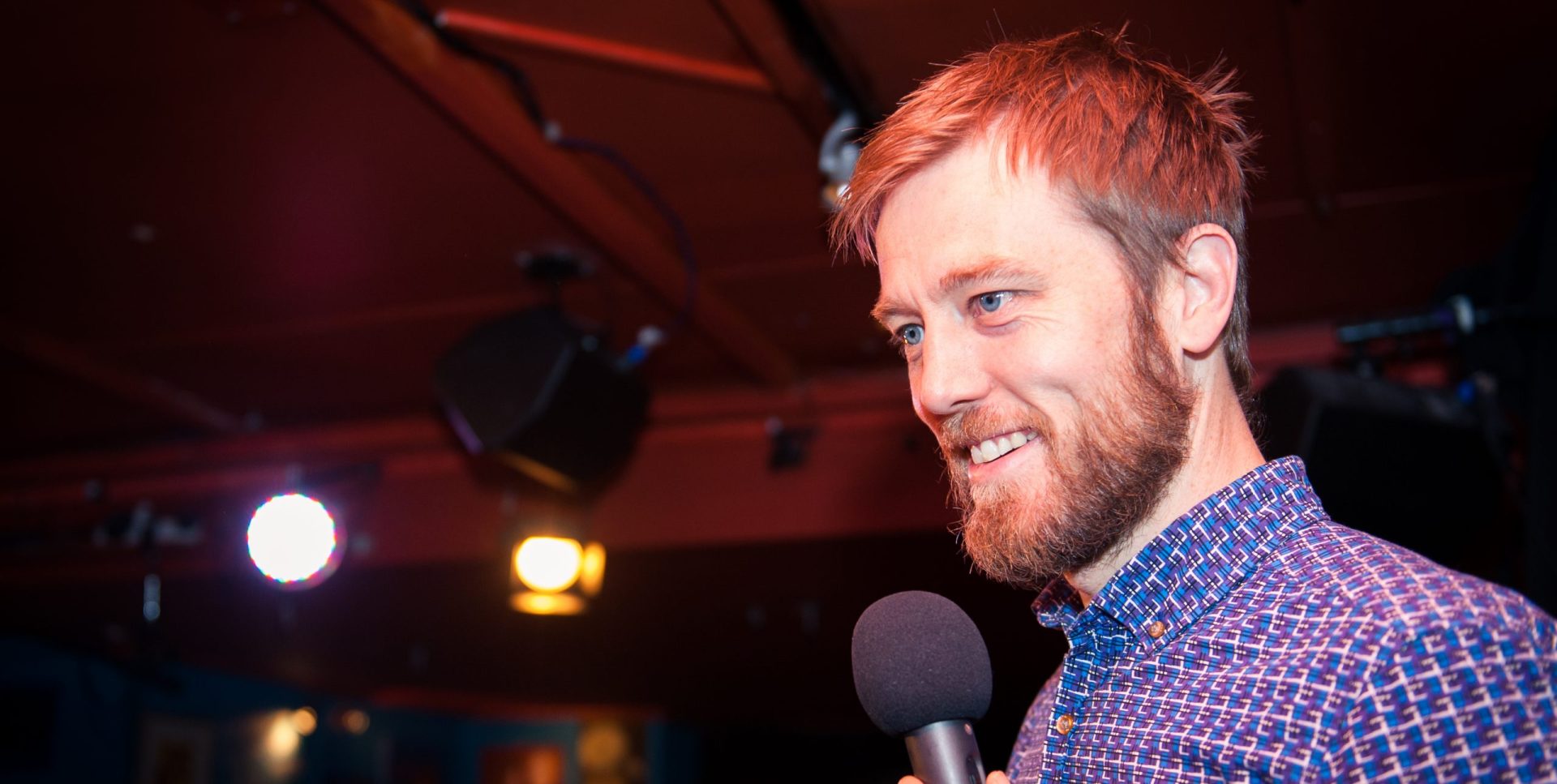
Alun Cochrane is a comedian who burst on to the scene by being nominated for the Best Newcomer award at the Perrier Awards for his first Edinburgh Festival Fringe show, My Favourite Words in My Best Stories, in 2004. He went on to be nominated for “Best Compère” and “Best Breakthrough Act” at the 2005 Chortle Awards. Alun Cochrane returned to the Edinburgh Fringe during the same year with a new solo show. Comedy With Sad Bits, and in 2006 with Introducing an Introduction to Alun Cochrane’s Imagination. Alun Cochrane has continued to perform at the Edinburgh Festival Fringe, with the reception always being positive. Alun Cochrane has made many appearances on comedy panel shows, including Never Mind the Buzzcocks, Have I Got News For You and 8 out of 10 Cats, as well as several acting roles. As a fan of Alun’s standup, I was excited to get a chance to talk books with him. Please enjoy my interview with Alun Cochrane.
When someone asks you ‘what do you do for a living?’ – How do you respond?
I always, ALWAYS, say I am a comedian. I know comedians who tell taxi drivers they are accountants or something else, but I really wanted to be a comedian and now I am one, so I won’t say something else just to get a minicab driver not to tell me jokes. I’d rather suffer the shit jokes but still, in my mind and his, be a comedian.

What are you reading at the moment?
I’m on the early chapters of a history book my father in law recommended about Napoleon’s best men. And I am afraid to say I have left Homo Deus by Yuval Noah Harari about 1/3 of the way through and will definitely return to it in the future (but given it is a book about the future I am hoping he expected that).

When you think about your childhood, what book comes to mind?
LOADS. Very early would be Enid Blyton, then adventure stuff like The Hardy Boys by Franklin W. Dixon. I always got The Broons or ‘Oor Wullie’ annuals for Christmas every year (I am Scottish under my English accent). I have a distinct memory of reading all the so-called ‘boys books’ a particular teacher had. He (brilliantly, I now realise) said: “well, start on the girls’ books” which meant I was a keen reader of Judy Blume books. In my teenage years I read all I could by Dick Francis, Agatha Christie and James Hadley Chase, I think those were suggested by my Gran. To this day I can find comfort in a pacy thriller.

What did you want to be when you were growing up?
I think I knew I would be comedian when I was a little boy. Then as a teenager I think I felt that to be too arrogant and changed it to actor, then back to comedian again.
When did you fall in love with making people laugh?
I moved schools a lot and my attempted integrating was based on fighting, football, and funniness. In the three-pronged attack, I realise now that I had a ‘best prong’.
What do you think your school aged self would think of the present day you?
I think he would wonder why I don’t fight as much as I used to. But overall I think he would be pretty pleased with how some of the shit he was going through turned out.
If you could wrap up a single book and gift it to yourself as you left education – which book would it be?
I can’t decide. Perhaps a book on decisiveness?
Does your reading have routine? Is there a particular time or place that you like to read?
I love to read before bed – but married life makes this difficult. I can’t be the only person trying to read without my light and page-rustling affecting another person’s sleep can I?
Which book has had the biggest impact on your career so far? How did it impact it?
Frank Skinner’s books have some of the best writing about being a standup comic and particularly what it is like to suddenly have a bit of data in your head become the basis for a joke, that I have ever read. And now I work with him on his radio show every week, so that’s a pretty significant influence.
And a book called Ha Bloody Ha: Comedians Talking by William Cook which was a series of interviews with comedians and the chapters were things like the best gigs, the worst gigs, the first gigs. I used to get that out of the library repeatedly and pour over it, I absolutely loved the kinship I found in it. That some of those comics were famous but were telling stories where they had felt just how I was feeling, arrogant, vulnerable, lonely, brilliant. I had forgotten all about that book until now.

What two pieces of advice would you give a young aspiring comedian?
- Read Frank Skinner’s books. 2) If you get a thick warm coat you can roll it up as a pillow for a backstage nap.
After these highly actionable bits of wisdom it is just a case of getting out there and gigging. A lot.
Who would you say your three biggest comedic influences are?
I struggle with indecision and lists of three make me feel stifled. Stand up comedians I’ve found influential include Billy Connolly, Frank Skinner, Jerry Seinfeld, Norm MacDonald, and Jasper Carrot. Nobody mentions Jasper Carrot in interviews, but he was a trailblazer of observational comedy on UK television.
Writers I think important to my comedy without necessarily being visible influences are Dave Eggers (I loved A Heartbreaking Work Of Staggering Genius), Sue Townsend’s Adrian Mole books, and then someone like Nick Hornby whose stuff is so accessible as to seem easy to do and therefore perhaps doesn’t get all the credit it should.


What book have you recommended the most to friends and family?
I spent a lot of last year telling people to read Sapiens by Yuval Noah Harari. I stand by it, what a book.

Do you prefer fiction or non-fiction?
I probably prefer slightly lightweight fiction about detectives, but I read a lot of popular non-fiction too, sort of self help, pop psychology or philosophy stuff.
Do you think reading is important?
Massively. There is a Will Smith clip where he talks about the importance of reading, and running. I think it is somewhat schmaltzy but the underlying message is great. By reading we can learn about the problems others have faced and what they did to overcome them.
What’s the best book you’ve read in the last 6 months?
Possibly Sapiens by Yuval Noah Harari. I have also recommended The Daily Stoic by Stephen Hanselman and Ryan Holiday (see Ryan Holiday’s reading list here) to a lot of people. And as a curve ball recommendation I’d throw in Fitter Food by Keris Marsden and Matt Whithmore, a cookbook by a healthy couple whose work I am a fan of.


Do you prefer real books or digital books?
Mostly real books. I buy the occasional book about fitness in ebook form. I have a kettlebell strength book called Simple and Sinister by Pavel Tsatsouline as an Ebook. That is about it really.

What is the book that you feel has had the single biggest impact on your life? What impact did it have?
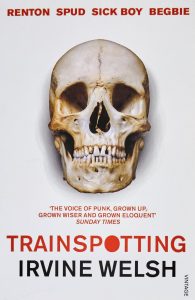
I find it VERY difficult to pick one book that impacted my life in that way as I’d like to hope they all dent and shape you a little or a lot and you keep doing that until you are you. But, I will say this, I remember reading Trainspotting by Irvine Welsh when I was at college, before the film was out, and I felt changed by it. I remember thinking it was so gritty and real but yet so imaginative and often very funny, I think it may have been the first book I read as an adult that was exactly ‘of it’s time’. I still remember feeling different after reading it than I was before it – which is a rare and powerful feeling – and from fiction!

Are there any books you haven’t mentioned that you feel would make your reading list?
Well, whilst we are on Irvine Welsh I should also doff my cap to How Late It Was, How Late by James Kelman. The short stories of JD Salinger. Tenth Of December by George Saunders, I thought fantastic but I’ve been slow on getting to his new one. Anything by Jonathan Franzen, Chuck Palahniuk.
For non-fiction: Motorcycle Roadcraft: The Police Rider’s Handbook (Honestly! It’s brilliant). Strength Training Anatomy by Frederic Delavier is worth having even if you don’t train just because it has excellent pictures of the anatomy! Almost everyone should read The Gift Of Fear by Gavin de Becker – it may save your life.
- How Late It Was, How Late by James Kelman
 How Late It Was, How Late by James Kelman
- Tenth Of December by George Saunders
 Tenth Of December by George Saunders
- Motorcycle Roadcraft: The Police Rider’s Handbook
 Motorcycle Roadcraft: The Police Rider’s Handbook
- Strength Training Anatomy by Frederic Delavier
 Strength Training Anatomy by Frederic Delavier
- The Gift Of Fear by Gavin de Becker
 The Gift Of Fear by Gavin de Becker
What books or subject matter do you plan on reading in the next year?
I am having a year of reading only history to (hopefully) fill in many, many blanks that I have on how we got to where we are. Ultimately I’d like to become one of those pompous people who can tie any conversation back to a historical fact they know. You know the type, “I think you’ll find the problem with Brexit goes right back to the repeal of the Corn Laws…” That’s the sort of bore I am hoping to become this year.
If you were to write an autobiography – what would it be called?
The autobiography nobody wanted to buy and I didn’t even want to write.
If you’d like to learn more about Alun Cochrane, you can find him on his website and Facebook.
Image credit: David P Scott
As an Amazon Associate we earn from qualifying purchases made through links on this page.