Roger Schank: Time For Educational Change
Roger Schank’s reading list
9 books mentioned in this interview
- A Child’s History of the World · V.M. Hillyer
- The Human Use of Human Beings · Norbert Wiener
- Human Problem Solving · Allen Newell and Herbert Simon
- Dynamic Memory · Roger Schank
- Teaching Minds
- Make School Fun
- 1984 · George OrwellRecommended 22 times
- Counterclockwise · Ellen Langer
- Slow Medicine · Victoria Sweet
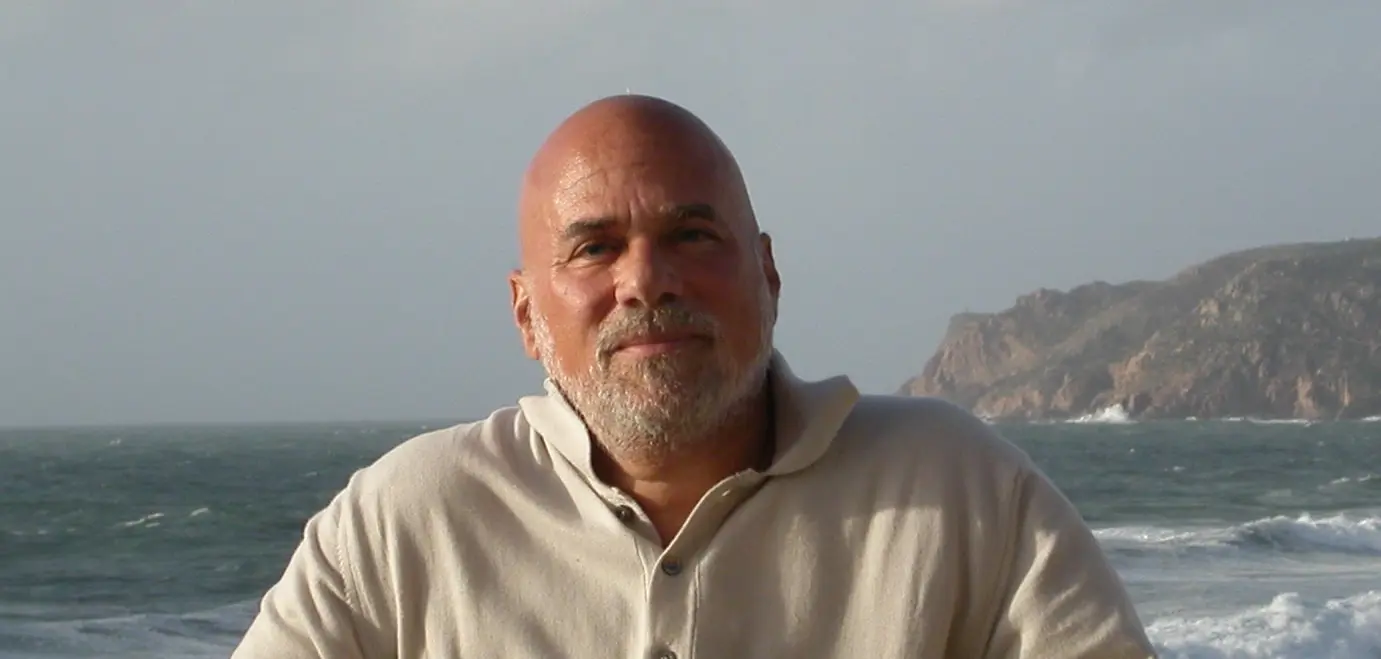
Roger Schank is the Chairman and CEO of Socratic Arts, a company that delivers Story-Centered Curricula to businesses and schools. He is also the Executive Director and founder of Engines for Education. Previously, Roger Schank was the Chief Education Officer of Carnegie Mellon’s West Coast campus, where he introduced the idea of master’s degrees that use a Story-Centered Curriculum in lieu of the traditional course-centered approach. He was the founder of the Institute for the Learning Sciences at Northwestern University where he was John Evans Professor of Computer Science, Education, and Psychology, (now Professor Emeritus). Prior to coming to Northwestern University, Roger Schank was Professor of Computer Science and Psychology at Yale University and Director of the Yale Artificial Intelligence Project. Roger Schank was also a visiting professor at the University of Paris VII, Assistant Professor of Linguistics and Computer Science at Stanford University, and research fellow at the Institute for Semantics and Cognition in Switzerland. Roger Schank is a fellow of the AAAI, the founder of the Cognitive Science Society, and co-founder of the Journal of Cognitive Science. He holds a Ph.D. in Linguistics from the University of Texas. One of the world’s leading Artificial Intelligence researchers, Roger Schank is the author of more than 125 articles and publications. He has written more than 30 books. Please enjoy my interview with Roger Schank.
When someone asks you ‘what do you do for a living?’ – How do you respond?
I am a retired professor of computer science (AI) who retired early in an attempt to use what I learned about learning while trying to get machines to learn. Now I run a business (Socratic Arts) which is devoted to changing how we see and do education.
What are you reading at the moment?
I like to read about history. I just started reading a book about how Broadway (the street) grew over time in New York City.
What’s your earliest memory of reading?
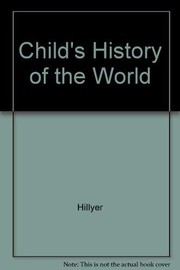
My parents used to read A Child’s History of the World by V.M. Hillyer to me. I loved it and taught myself to read so I could read it myself.
If you could encourage young people to read one book in particular, what would it be and why?
I don’t like this question. It represents exactly what I hate about the school system. It assumes that all children have the same interests. I encouraged my son to read about the history of cities and transportation because he loved riding the subway in New York. (Today he is the chief innovation officer of the transit system in Los Angeles.)
What is the worst job you’ve ever had?
I had a summer job as an actuarial trainee at the Mutual Benefit Life Insurance company. Dull and repetitive. So repetitive that I wrote a computer program to replace myself. This was not appreciated. I was told that I was the only trainee they ever had who did not receive a scholarship after the summer.
Do you read as much as you’d like to?
I am in charge of my own life, so yes. (But, I only read in the sunshine, so the weather is in charge. Living in Florida helps.)
If a complete novice was looking to read just three books as an introduction to A.I., which three would you recommend and why?
- The Human Use of Human Beings
 The Human Use of Human Beings
- Human Problem Solving
 Human Problem Solving
- Dynamic Memory
 Dynamic Memory
The AI I work on has little to do with what is touted as AI these days. I, and the people I admire were interested in how people work and not in how to go through data really fast. Modern AI is not really about how the mind works. To understand AI in a deep way we need to consider seriously how people can read a book, or conduct a conversation, or get surprised, or tell a story, or forget something, or come up with a new idea. This is what I worry about but it is not what modern AI worries about.
- The Human Use of Human BeingsThe Human Use of Human Beings
- Human Problem SolvingHuman Problem Solving
- Dynamic MemoryDynamic Memory
Is there a book that you’ve read more than once? What is it and why did you revisit it?
No.
What book have you recommended the most to friends and family?
I don’t recommend books to people for the same reason that I don’t think every kid should read a particular book. I take recommendations for books for me from my daughter, because she is really into books (writing them — new book coming out in June) and because she knows me.
What’s your favourite genre of book and why?
I like to read about history. It put things in perspective. My wife is French Canadian and so we now live in Quebec in the summer. The conflicts in Quebec are obvious to a new arrival. I want to know how and why. Last summer I read three books on Quebec, one by someone of English background, one by someone of French background, and one by a serious radical. History that isn’t slanted is hard to find. (Did you know who won the War of 1812? Apparently it was Canada. I didn’t even know they were in it. They certainly weren’t a country at the time.)
What do you think a world without books would be like?
The right question is what a world without storytelling would be like. People have been telling each other stories for ever. One story reminds you of another for a reason. We learn what we ourselves think from hearing and telling stories. Books are just (a not so current) version of story telling (which has been around forever.)
Is there an author whose writing you’re such a fan of, that you’ll read everything they release?
There were. George Orwell for one. Charles Dickens for another. (Haven’t seen anything from them lately). I’d also include Kurt Vonnegut.
Do you think digital books will ever completely replace real books?
Of course. Paper anything is on its way out. Books are the size they are because of the weight and selling of paper. No 10 page books? How would a publisher make money on that? No 10,000 page books either. Digitization allows books of any size.
What book do you feel humanity needs right now?
People need to take seriously that schools are stuck in a time warp. We still teach what the Romans taught in the way that they taught it. The Romans were trying to train Orators. Not a lot of Orator positions open these days. So here is a shocker: They need to read what I have been saying about this: Teaching Minds and Make School Fun are two of mine that I’d recommend.


Given your expertise in A.I., what do you believe the technological aspect of our world will look like in 10, 25 and 50 years?
We will see computers that handle the mundane chores of life: cooking, cleaning, making your plane reservations. But more importantly, computers that let kids learn to do whatever they want whenever they want. Computers will eliminate schools and good riddance.
What is the book that you feel has had the single biggest impact on your life? What impact has it had?
1984 by George Orwell, for obvious reasons.

Are there any books you haven’t mentioned that you feel would make your reading list?


What books or subject matter do you plan on reading in the next year?
I don’t plan reading. I read reviews and get curious.
If you were to write an autobiography – what would it be called?
Imagine what you want, then build it.
If you’d like to learn more about Roger Schank, you can find him on his website and Twitter.
As an Amazon Associate we earn from qualifying purchases made through links on this page.