William Dick: Scotland, Stones and Symbols
William Dick’s reading list
20 books mentioned in this interview
- American Tabloid
- The Cold Six Thousand
- Blood’s a Rover
- The Dudley Smith Trio
- Perfidia
- Colin the Cowboy · Enid Blyton
- The Materials of the Artist and Their Use in Painting · Max Doerner
- The Nude · Kenneth Clark
- Ways of Seeing · John BergerRecommended 5 times
- Treasure Island · Robert Louis StevensonRecommended 6 times
- The Dwarfs · Harold Pinter
- Villages of Glasgow, vol. 1 · Aileen Smart
- The Chambers Scots School Dictionary · Iseabail Macleod and Pauline Cairns
- The Scots Dialect Dictionary · Alexander Warrack
- Megalithic Brittany · Aubrey Burl
- Prehistoric Avebury · Aubrey Burl
- Newgrange, Archaeology, Art and Legend · Michael J. O’Kelly
- Stones, A Guide to Some Remarkable Eighteenth Century Gravestones · Betty Willsher and Doreen Hunter
- The Prehistoric Rock Art of Galloway and Isle of Man · Ronald WB. Morris
- The Pictish Conquest · James E. Fraser
William Dick is a Scottish artist who lives In London. He has exhibited his work extensively over the United Kingdom, but has also won prestigious awards internationally. William’s work can be found in both public and private collections throughout Europe, USA, Russia and the Middle East. William Dick’s geometric abstract painting style is inspired by a fascination for geological transformation of the landscape, as well ancient tribal symbols. I am a fan of his work and was extremely excited to have the opportunity to talk books with William. Here is my interview, with the lovely William Dick…
When someone asks you ‘what do you do for a living?’ – How do you respond?
I am an artist and sometimes a printmaker whose ambition is to make a good painting.
What are you reading at the moment?
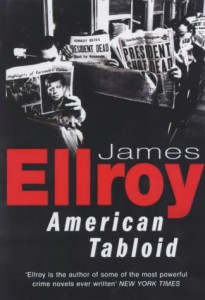
I have been ploughing my way through James Ellroy’s back catalogue: American Tabloid, The Cold Six Thousand, Blood’s a Rover, The Dudley Smith Trio and Perfidia. I tend to do compendiums of fiction and in the past Emile Zola, Franz Kafka, Raymond Chandler, Cormac McCarthy, Elmore Leonard etc.


When you think about your childhood, what book comes to mind?
An important book is Colin the Cowboy by Enid Blyton that I received as a prize during my first year at primary school. It is probably important because it has words and pictures. I recently purchased a copy on eBay to replace my long lost copy. Also important were the yearly Christmas annuals of Scottish comic strip characters, Oor Wullie and the Broons, along with other British and American comics as inspiration for drawing.

What did you want to be when you were growing up?
I wanted to be a Royal Mail telegram delivery boy with a bicycle or a Canadian Mounted Policeman. Both of which strangely come with a mode of transport?!
What do you think your school aged self would think of the present day you?
I have got older and what happened to my hair? Surprised that I have travelled to places that seemed a fantasy during my childhood. I remember a geography teacher at school telling the class that they would probably go to U.S.A and nobody believed her. Also at school everyone thought what was the point of learning French as we would never go there. How wrong I was and should have learned foreign languages.
If you could wrap up a single book and gift it to yourself as you left education – which book would it be?

Does your reading have routine? Is there a particular time or place that you like to read?
I collect old newspapers to take off excess paint and mop up in the studio. I spend too much time reading them along with detective stories, whist waiting for the paint to dry. I also use a variety of reference books for ideas, not for copying, but inspiration for my work. Bedtime reading involves me falling asleep after five pages and having to reread the previous last page the next night.
Which book has had the biggest impact on your career so far?
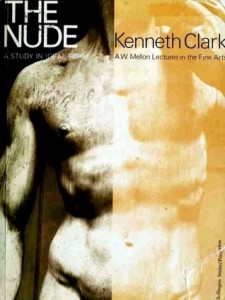
The Nude by Kenneth Clark and Ways of Seeing by John Berger. Both introduced me to looking and thinking about art and were television series when I was studying at college and I can still hear John Berger’s distinctive voice when I read his work.


Do you have any books that you strongly associate with someone important in your life?
I have a book of Robert Burns poetry given to me by my grandfather. He was presented with it in his role of local secretary of the branch of the Boilermakers Workers Union.
What book have you recommended the most to friends and family?
I loved Treasure Island by Robert Louis Stevenson when I was younger and revisited recently. It still is a wonderful adventure full of visual images.

Do you prefer fiction or non-fiction?
I buy lots of art books and catalogues for reference in my work and spend most of my time looking at and reading non-fiction as part of my practice. This involves contemporary practice and history of art. I am also sucker for American film noire detective novels.
Do you think reading is important?
In my past employment I have taught basic literacy to a wide range of people, students with learning difficulties, students with English as their second language. I believe it is important for people to access and have the ability to read, to make a shopping list, read a bus timetable or to reading works of the great philosophers.
What’s the best book you’ve read in the last 6 months?
The book Villages of Glasgow, vol. 1 by Aileen Smart has allowed me to revisit my childhood haunts and learn about the extensive development and redevelopment on a city while retaining individual identity of each area.
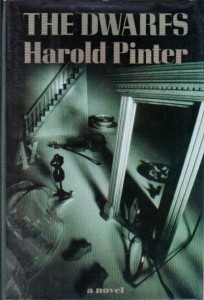
The Dwarfs by Harold Pinter relates to the street and area where I now live. Harold Pinter, Nobel Prize winner, English playwright, screenwriter, director and actor, lived and spent his childhood, teenage years in the street where I now live, and his first novel contains full clear personal visual descriptions of the surrounding area.


Do you prefer real books or digital books?
I need and prefer real non-fiction books to refer and gain ideas for my work. Digital books are good for travelling as they cut down on the weight, but I find them inconvenient when having to refer back to things.
Name a book that you feel every human should have to read by law.
All work by Franz Kafka.
What is the book that you feel has had the single biggest impact on your life?
The Chambers Scots School Dictionary by Iseabail Macleod and Pauline Cairns and The Scots Dialect Dictionary by Alexander Warrack, both of which I use for titles in my work. I spend a lot of time selecting words that relate to the image in terms of meaning and sound.


Are there any books you haven’t mentioned that you feel would make your reading list?
All these books have been invaluable to my working practice.
- Megalithic Brittany
 Megalithic Brittany
- Prehistoric Avebury
 Prehistoric Avebury
- Newgrange, Archaeology, Art and Legend
 Newgrange, Archaeology, Art and Legend
- Stones, A Guide to Some Remarkable Eighteenth Century Gravestones
 Stones, A Guide to Some Remarkable Eighteenth Century Gravestones
What books or subject matter do you plan on reading in the next year?
I have just embarked on a new series of works based on Pictish symbols and have started reading: The Prehistoric Rock Art of Galloway and Isle of Man by Ronald WB. Morris and The Pictish Conquest by James E. Fraser.


If you were to write an autobiography – what would it be called?
“Who am I?”
If you’d like to learn more about William Dick and his work, check out his website.
As an Amazon Associate we earn from qualifying purchases made through links on this page.