Alan Bradley: A Powerful Blast Of Inspiration
Alan Bradley’s reading list
12 books mentioned in this interview
- Bloodhounds and Diamond Dust · Peter Lovesey
- Pinafore Palace · Kate Douglas Wiggin and Nora Archibald Smith
- Finnegan’s Wake · James JoyceRecommended 3 times
- Dictionary of National Biography edited · Leslie Stephen
- The King James BibleRecommended 3 times
- The Oxford English Dictionary
- Bleak House · Charles DickensRecommended 7 times
- The Book of Psalms: A Book of Commentary · Robert Alter
- H is for Hawk · Helen Macdonald
- The Sword in the Stone
- The Nine Tailors · Dorothy L. Sayers
- Renoir’s Dancer: The Secret Life of Suzanne Valadon · Catherine Hewitt
Books by Alan Bradley: The Sweetness at the Bottom of the Pie
Alan Bradley is an author who after a long career in television broadcasting, he took early retirement from the University of Saskatchewan to write full-time. Alan Bradley has published many children’s stories as well as lifestyle and arts columns in Canadian newspapers. His adult stories have been broadcast on CBC radio and published in various literary journals. He has also written several screenplays and taught university-level courses in screenwriting. Alan Bradley was the recipient of the first Saskatchewan Writers Guild Award for Children’s Literature. The first book of his Flavia de Luce series, The Sweetness at the Bottom of the Pie, won the 2007 Debut Dagger Award of the Crime Writers Association in the UK; among numerous other awards. Besides appearing on the New York Times bestsellers list as a Favorite Mystery of 2009, “Sweetness” was also, among other honours, an American Library Association nominee as Best Book For Young Adults; a Barnes and Noble Bestseller, and was named to the 2009 Bloomer List. All six of the Flavia de Luce books by Alan Bradley published to date have been New York Times bestsellers, and are presently published in thirty-nine countries and thirty-six languages and the series has been optioned for television. Please enjoy my interview with Alan Bradley.

How do you describe your occupation?
A writer is one who primes his or her writing pump by reading. As Dr. Johnson famously observed: “A man will turn over half a library to make one book.” To be paid to read in order to write seems to me, a foretaste of heaven: the miracle of writing is always preceded by the sacrament of reading.
Talk us through a typical day for you…
I prefer to begin work early, at about 4:30 in the morning. At that hour, the conscious mind is not yet awake and the subconscious can be safely plundered without alerting the watchdogs. Finishing my day’s work by noon allows me to feel all self-righteous for the rest of the day. After lunch, I can immerse myself in research materials and correspondence. I seldom write in the evenings.
What are you reading at the moment and what made you want to read it?
Bloodhounds and Diamond Dust by Peter Lovesey. I recently had the pleasure of spending a golden afternoon in a Shropshire garden with Peter and his wife and realized I needed to catch up. His first book, Wobble to Death, blew me out of the water nearly fifty years ago, and forty books later, he’s still at it. He’s won every award under the sun and is truly a mastery of mystery.

Can you remember the first book you read by yourself?
Yes. It was Pinafore Palace by Kate Douglas Wiggin and Nora Archibald Smith, a book of poems, in which was reprinted a verse by Laura E. Richards, which I can still recite from memory (and will, at the drop of a hat):
The owl and the eel and the warming-pan,
They went to call on the soap-fat man.
The soap-fat man he was not within:
He’d gone for a ride on his rolling-pin.
So they all came back by the way of the town,
And turned the meeting-house upside down.
Are you a page folder or a bookmarker?
No to both. I memorize the page number I stopped at before switching off the light.

When did you fall in love with reading?
Somewhere between the ages of 4 and 5. A series of childhood illnesses confined me to the house, and my older sisters decided (wisely) to teach me to read so that they wouldn’t bear the burden of entertaining me. Three-quarters of a century on, I’ve never stopped.
Can you remember the first story you ever wrote?
I can indeed. It began with a boy named Johnny Fenton coming in from the rain and putting away his rubber boots and waterproof coat. My sister laughed herself silly when she read it. “Who do you know,” she demanded, “that ever put their things away?” Which caused me to give up on long-form fiction and begin production of small comic books: a sheet of writing paper folded into four, hand illustrated, containing the adventures of Muddy the Turtle: a production which I sold successfully to my young cousins for 5 cents a copy until their mother found out and demanded their money back.
If you could gift yourself books at age 16 and age 25 – what would they be and why?
At 16 (because I was more receptive) a copy of Finnegan’s Wake by James Joyce would have given me a wider view of the world than I had obtained growing up in a small town, and at 25, a complete set of the Dictionary of National Biography edited by Leslie Stephen, for much the same reason.


Can you talk us through your writing process, from the first spark of an idea, to having your first completed draft?
Ideas tend to come as a spark while walking – or reading (see above). Like a lightning bolt, a sharp, slender tracer quickly becomes a powerful blast of inspiration: a flood of ideas that need to be written down or acted upon immediately, no matter what. If I can get to the keyboard quickly enough, the material tends to write itself. If I’m delayed, the process becomes progressively more difficult. The body of the work consists of having the stamina to keep my posterior glued to a chair for whatever number of hours – hundreds, usually – it takes. This process consists of hills and dales and level stretches. Sometimes it’s fun and sometimes it isn’t.
For someone starting out in your career, which three books would you make required reading and why?
The King James Bible (as a model of stately writing and perhaps a few tips on living, as well).
The Oxford English Dictionary, all 13 volumes of it. All right, I’m cheating a bit, but it’s worth it. Ideally, you’ll spend more time among its pages than you will eating, drinking or sleeping.
Bleak House by Charles Dickens, as a model of how it ought to be done.


If you could invite 5 authors (dead or alive) to a dinner party – who would they be and why?
Shakespeare (obviously) to set the tone; Mark Twain and Charles Dickens to eavesdrop on their small-talk; James Joyce (for seasoning), and Evelyn Waugh (for deviltry).
What was the last book you purchased, and why did you buy it?
The Book of Psalms: A Book of Commentary by Robert Alter. The author is a biblical scholar of almost unfathomable depth, and I’ve always felt that there’s far, far more to the Wisdom Literature than meets the casual eye and mind.

What is your favourite thing about reading?
As I have said, reading is a sacrament. It allows one to sit quietly and watch the reaction of one’s own mind to the words of others, allowing two brains to blend: a marriage of minds if you will; an alchemical action and reaction.
What’s the best book you’ve read in the last 6 months?
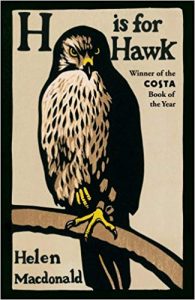
H is for Hawk by Helen Macdonald. Sublimely written and more than deserving of every bit of the praise that has been heaped upon it. Highly recommended. Do I make myself clear?

If you could insert yourself into any book, which would you pick and why?
The Sword in the Stone, the first book of The Once and Future King by T.H. White, and in particular, the scene in Merlin’s cottage. For sheer exuberance, enthusiasm, idealism, vivacity, it has never been equalled. This is what happens when an author’s pen comes to life.

What two pieces of advice would you give a young aspiring writer?
-
Read
-
Write
Never stop. Never give up.
What is the book that you feel has had the single biggest impact on your life? What impact did it have?
The Nine Tailors by Dorothy L. Sayers. This book, in its sober black binding, was put into my hands when I was a child by my grandmother, a woman of exquisite and eclectic reading tastes: a book that set my feet upon the path to mystery writing. Although it took me more than 60 years, I got there in the end, and my admiration for The Nine Tailors has never slackened, but rather intensified, if that’s possible.

Are there any books you haven’t mentioned that you feel would make your reading list?
Finnegan’s Wake by James Joyce again. The older I get, the less I understand it but the more I’m compelled to read it. The more I read it the more I feel some great process is taking place beyond my ken.

Which book sat on your shelf are you most excited about reading next and why?
Renoir’s Dancer: The Secret Life of Suzanne Valadon by Catherine Hewitt. I have long been fascinated by the lives of the Impressionists, which are stranger than any fiction could ever paint them. An escape to 19th century Paris and the French countryside is as eye-opening as a trip to Venus.

If you’d like to learn more about Alan Bradley, you can find him on his website and Facebook.
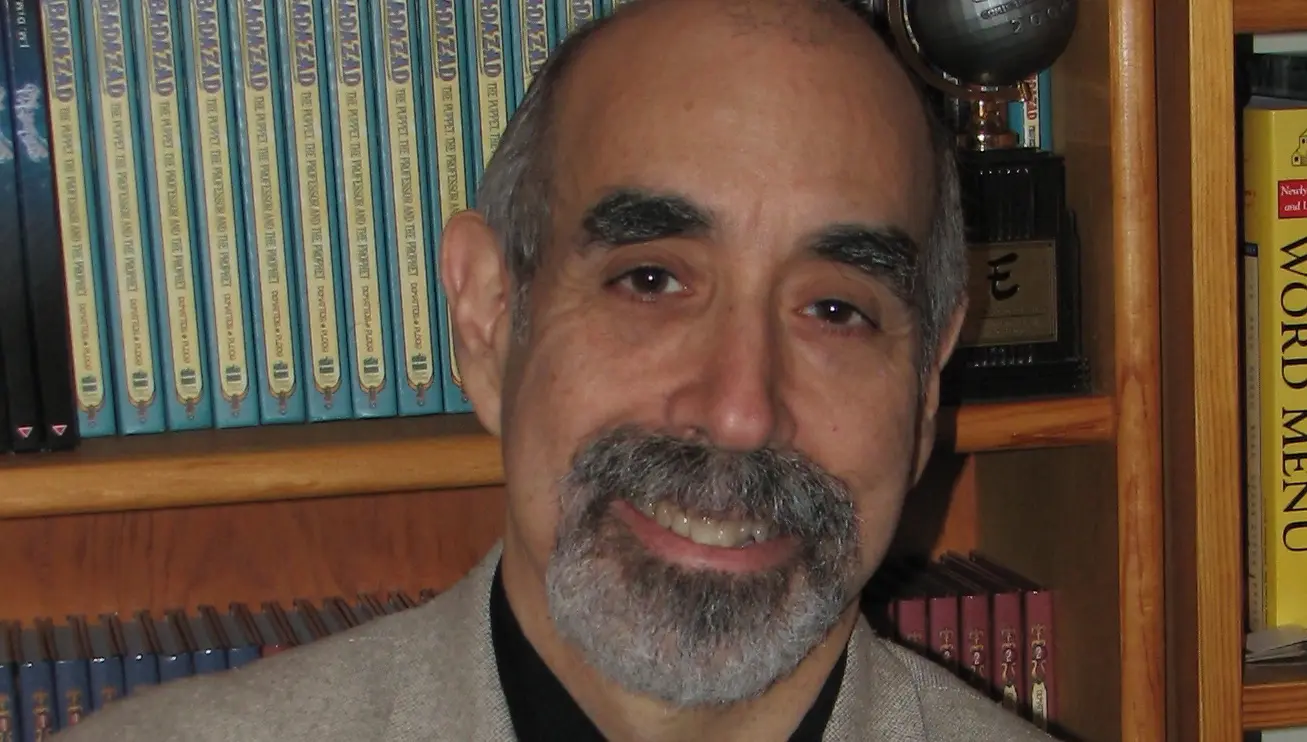
Photo by Shirley Bradley
As an Amazon Associate we earn from qualifying purchases made through links on this page.